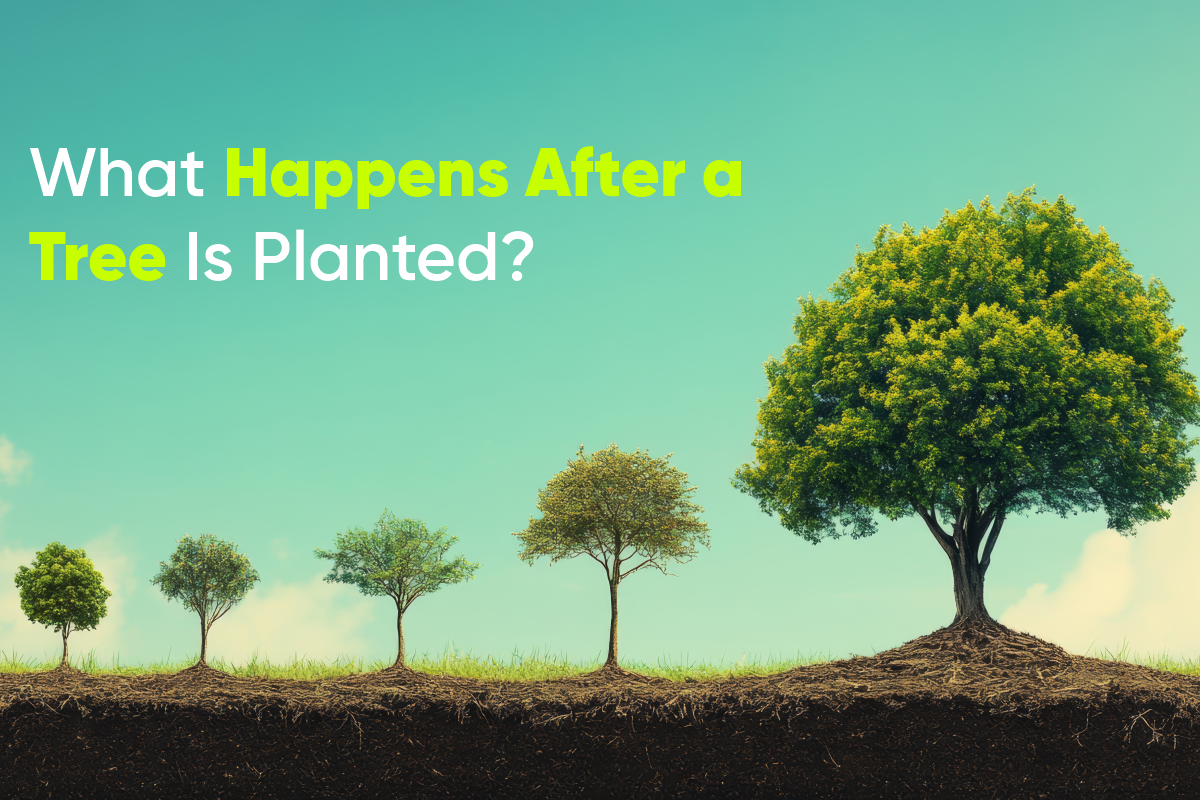
When we plant a tree, most of us feel something immediately. A small sense of hope, quiet satisfaction and maybe even relief. We take a picture, we water it, we stand back and look at it as if something big has already happened. But the truth is, almost nothing visible happens in the beginning.
In any tree plantation initiative, the act of planting is only the first step. It is honestly the easiest part. The difficult and meaningful part begins after everyone has gone home and after the soil settles back around the tiny stem. For weeks, sometimes months, the sapling looks the same. There is no dramatic growth or sudden height. If you walk past it every day, you might even wonder if it is alive at all. But beneath the soil, something steady is happening. The roots are searching. They are stretching into unfamiliar ground, trying to find moisture, trying to find strength. The tree is not growing upward because it is learning how to survive.
This is what many people do not think about when they talk about the importance of planting trees. They imagine shade, fruits, tall green branches. But they rarely imagine the silent struggle under the soil. And yet, that struggle decides everything.
The first year is slow, very painfully slow. The sapling does not try to impress anyone. It simply focuses on holding on. It drinks water carefully and adjusts to the soil. It learns the temperature of the place. Some leaves may fall and some branches may look weak. From the outside, it feels like nothing is happening but the roots are building a life.
This is what truly answers the question of what happens after tree plantation. Growth is not immediate and strength is also not visible. A tree does not rush; it simply understands that survival comes before height. By the second year, if the care has been consistent, you begin to notice small changes such as a little more height, a slightly thicker stem, and more leaves than before. Well, it is still fragile and either a strong wind or a dry season can test it but now it is less afraid as the roots have found some confidence.
At Sadbhavana Vrudhashram, when we speak about a tree plantation initiative, we do not just count how many saplings were planted, we remember the ones that stood through summer, the ones that survived irregular rain and the ones that needed extra water because the soil was harsher than expected. Each surviving tree feels personal as there is something very emotional about watching a sapling survive its first harsh season. It feels like watching a child take its first steps alone. You know it is small, you know it is vulnerable and yet it is trying.
By the third year, the tree begins to look like it belongs. The growth becomes noticeable, new branches stretch outward, and the leaves grow fuller. The trunk starts to feel firm when you touch it and now the energy that was once spent only on roots begins to move upward. This is the stage where people finally see results but they are seeing the outcome of three years of invisible effort. This is the real long term impact of tree plantation. It is not quick greenery or social media pictures. It is patience, commitment and care repeated again and again without immediate reward.
Many people ask, how a small sapling becomes a big tree. The answer is not dramatic. It becomes big by surviving ordinary days, dry mornings, and heavy rains. It also comes by surviving neglect and then receiving care again. And well it becomes big because someone continued to water it when no one was watching. There is also a deeply human lesson in this. A tree does not grow because someone praised it but it did because someone showed up consistently.
In the early months, watering matters more than fertilizer. Proper mulching matters more as the soil around the root ball needs to stay moist but not flooded. Too much water can kill it, too little can weaken it, like human life balance is everything. Sometimes staking is required if the winds are strong but even that must not be permanent. A tree needs slight movement. That gentle sway in the wind actually strengthens its trunk. Protection is important, but so is allowing it to build its own resilience. Mulch helps regulate temperature and hold moisture. It protects the root zone but if you pile it too close to the trunk, it can cause decay. Even care must be done carefully.
There are no shortcuts here.
Over time, when the tree matures, something beautiful happens. It begins to give back. Shade on hot afternoons, shelter for birds, in some species fruits and in the others flowers, and also the precious oxygen we never see but constantly breathe. But the giving stage comes only after years of receiving. This is why at Sadbhavana Vrudhashram we speak often about planting a tree for future generations because the person who plants it may never sit under its full shade. The child who plays under it might not even know who planted it and yet the connection exists.
There is something deeply moving about that. When we explain the importance of planting trees, we try to move beyond statistics. Yes, trees absorb carbon. Yes, they cool the environment. Yes, they prevent soil erosion. All of that is true. But they also teach patience. They teach quiet responsibility. They teach that growth takes time. And sometimes, they even teach forgiveness. Because even when a branch breaks, new shoots can emerge. Even when a season is harsh, recovery is possible.
Eventually, a tree becomes mature. It produces fruit or flowers depending on its species. It becomes part of the landscape. People stop noticing it as “new.” It simply becomes a tree. And many years later, when it grows old and hollow, even then it serves life. Birds nest inside. Insects live within the decaying wood. Nothing in a tree’s journey is wasted.
So what really happens after a tree is planted?
A quiet battle begins, a patient process unfolds and a small life decides to stay. The real journey of tree growth is not loud. It does not demand attention. It simply continues, season after season and perhaps that is why it touches us so deeply because in many ways, it mirrors us.
We plant a sapling hoping it will grow. But what grows alongside it is something inside us too. A sense of care, a sense of responsibility and a reminder that some of the most meaningful changes in the world happen slowly, and often out of sight. That is the real journey.


