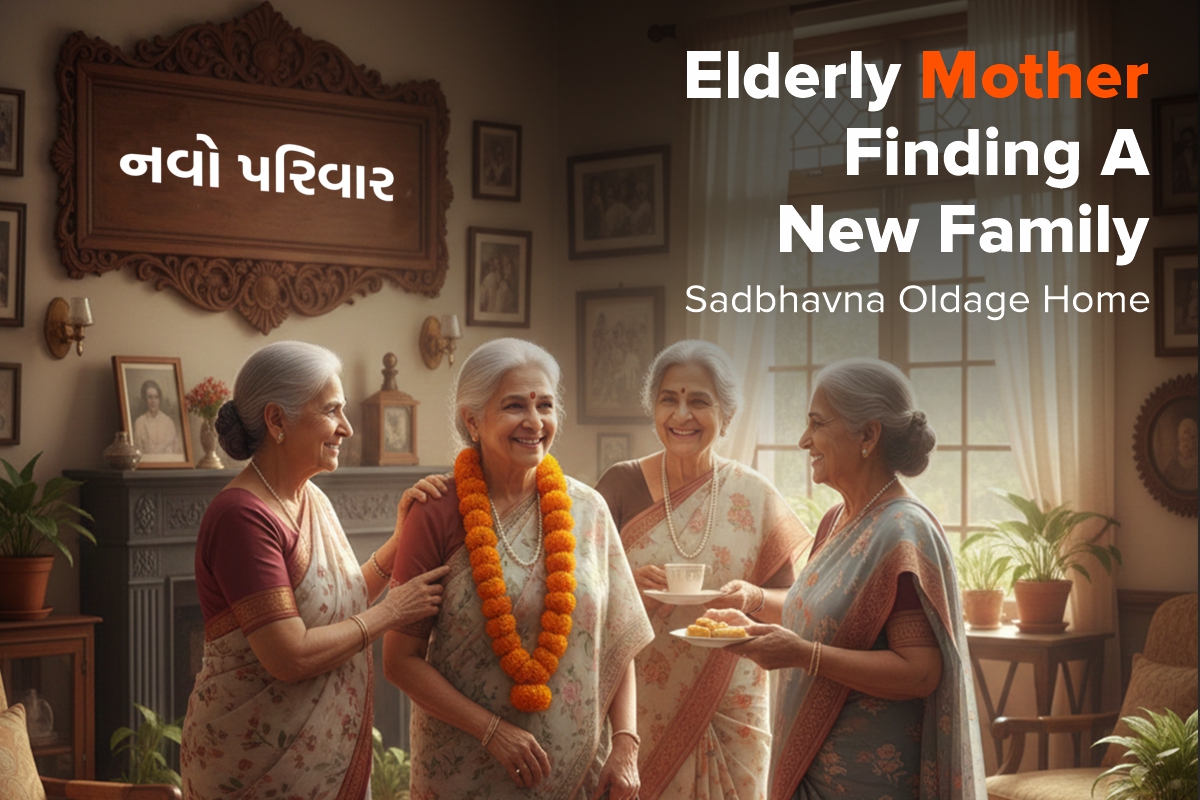
The Heartwarming Story of an Elderly Mother Finding a New Family – Sadbhavna Old Age Home
She sat on that wooden bench every morning. Same spot. Same time. Watching other people’s children play in the park.
Her name is Kantaben. 74 years old. Two sons. One daughter. All settled abroad.
“They send money every month,” she told me, her fingers trembling slightly as she adjusted her saree. “But beta, money doesn’t talk to you at night when you can’t sleep.”
The Day Everything Changed
Three years ago, Kantaben’s husband passed away. The house became too quiet. Too big. Too full of memories that hurt more than they comforted.
Her children called once a week. Sometimes twice if she was lucky. They promised to visit during Diwali. Then during summer. Then “soon.”
Soon never came.
The neighbors were kind, but busy with their own lives. The maid came twice a day, cooked her meals, and left. Kantaben would eat alone, sleep alone, and wake up alone.
She wasn’t living. She was just… existing.
Until someone told her about Sadbhavna Vrudhashram.
Walking Through Those Gates
“I was scared,” Kantaben admits. “I thought old age homes were where children dumped their parents. Dark places. Sad places.”
She couldn’t have been more wrong.
The moment she stepped into Sadbhavna, she heard something she hadn’t heard in months – laughter. Real, genuine laughter.
An elderly man was telling jokes to a group gathered under a tree. Two women were singing an old Gujarati folk song. Someone was teaching yoga in the garden.
“This doesn’t look like the old age homes I’d heard about,” she whispered.
It wasn’t. Because Sadbhavna isn’t just an old age home. It’s a family.
Finding Her People
Within a week, Kantaben had made three close friends.
Hansaben, 68, whose children visit every month but who chose to stay at Sadbhavna because “I found my tribe here.” Jyotiben, 71, who teaches everyone how to make the best theplas. And Rameshbhai, 76, who tells the same stories every day, but everyone listens anyway because his eyes light up when he talks.
They eat together. Pray together. Celebrate festivals together. Argue about which TV serial is better. Complaining about the food (even though it’s quite good). Share their medicines when someone forgets to pick up theirs from the dispensary.
They do what families do.
“My children gave me money,” Kantaben says. “But Sadbhavna gave me mornings worth waking up for.”
More Than Just Shelter
What makes Sadbhavna special isn’t just the clean rooms or the three meals a day or the medical care.
It’s Raju, the caretaker, who remembers that Kantaben doesn’t like too much sugar in her tea.
It’s the volunteers who come every Sunday to sing bhajans, and stay back to just chat.
It’s the birthday celebrations where everyone gathers, sings off-key, and eats cake with the joy of children.
It’s the small vegetable garden where the residents grow tomatoes and spinach, arguing passionately about whose plants are growing better.
It’s the monthly trips to the temple, the beach, sometimes just to the market – because getting out and feeling the wind on your face matters.
It’s being called “Ba” and “Kaka” by everyone, not out of obligation, but out of genuine affection.
Sadbhavna understands something important: old people don’t just need food and shelter. They need purpose. Connection. Dignity. Love.
The Truth Nobody Talks About
Here’s what Kantaben wants you to know: “I don’t blame my children. They have their lives, their jobs, their own children to raise. I understand.”
She pauses, then continues. “But understanding doesn’t make the loneliness hurt less.”
There are hundreds of elderly people across Gujarat, across India, sitting alone in big houses, waiting for phones that rarely ring, counting days between visits that become months, then years.
Some have children. Some don’t. But the ache is the same.
Sadbhavna Vrudhashram was started for people like Kantaben. Over 550 elderly residents currently call it home. That’s 550 people who now have someone to share their morning chai with. Someone who notices when they’re not feeling well. Someone who celebrates their birthday.
What Love Actually Looks Like
Last month was Kantaben’s birthday. She didn’t expect much. Her children sent wishes on WhatsApp. That was nice.
But at Sadbhavna, they threw her a party. Nothing fancy. Just sweets, some decoration, everyone singing together.
Hansaben had saved money from her pension to buy Kantaben a new saree. Jyotiben made her favorite chevdo. Rameshbhai presented her with a poem he’d written (it didn’t rhyme, but it was beautiful anyway).
Kantaben cried. Happy tears this time.
“This,” she said, looking around at all the faces smiling at her, “this is what family feels like.”
You Can Be Part of This Story
Sadbhavna runs entirely on donations and the goodwill of people who believe that our elders deserve better than loneliness.
They’re building an even bigger facility to help 2,000 more elderly people find the same warmth Kantaben found.
You don’t need to donate money (though that helps). You can volunteer. Visit. Spend an afternoon. Listen to their stories. Share your own.
Because here’s the thing about old people: they’re not different from us. They’re just us, years ahead. With the same need for connection, conversation, and care.
When you visit Sadbhavna, you’re not doing charity. You’re giving someone what we all desperately need – to feel seen, heard, and valued.
The Ending That’s Really a Beginning
Kantaben still sits on a bench every morning. But now it’s in the Sadbhavna garden. And she’s not alone.
Hansaben sits next to her. They drink chai together. They gossip about yesterday’s drama. They make plans for tomorrow.
Her children still call once a week. But now when they ask “How are you, Ma?” she has stories to tell. She laughs more. She sounds… happy.
“I thought my story was ending,” Kantaben tells me. “But it was just beginning a new chapter.”
That’s what Sadbhavna does. It doesn’t just give shelter to old people. It gives them back their lives.
And honestly? That’s something worth celebrating.


