


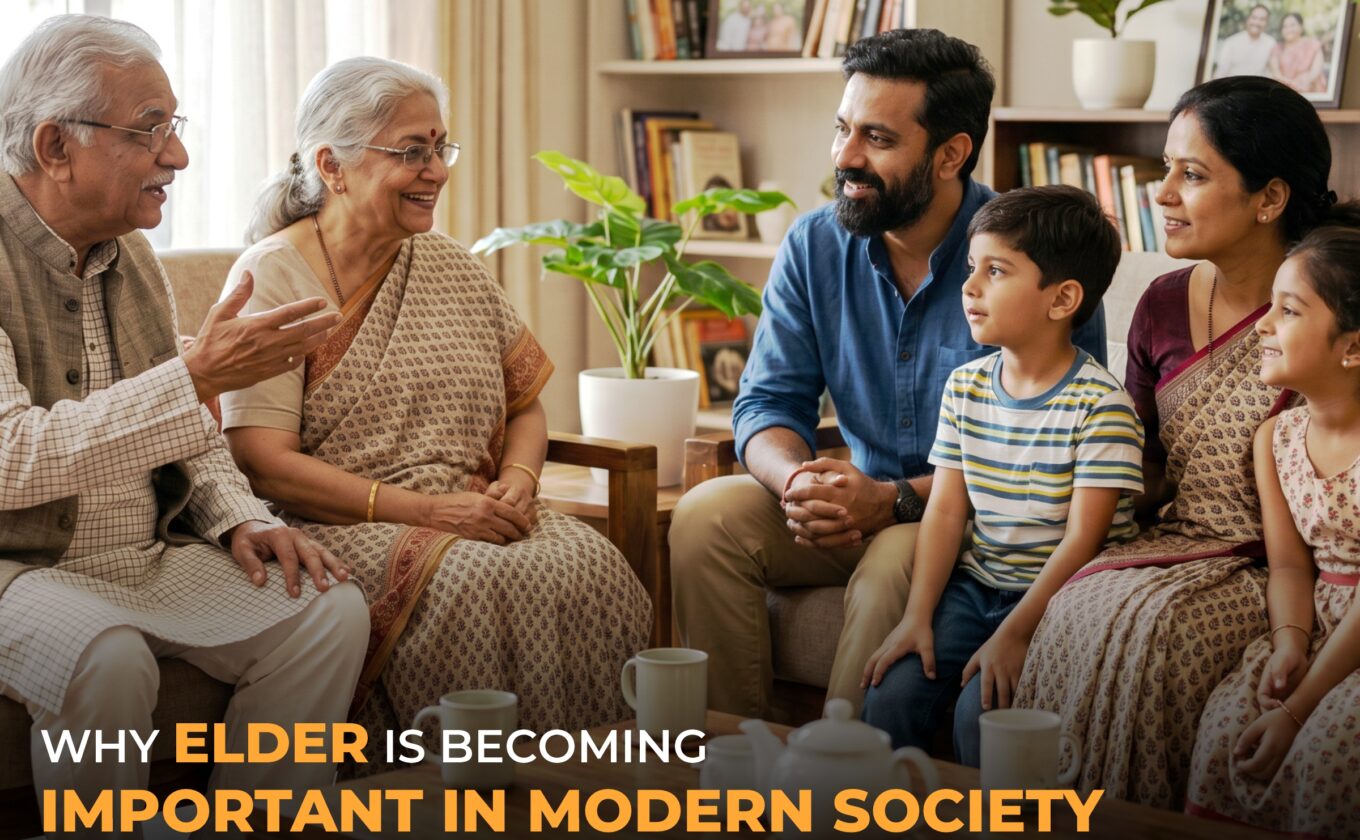
Elder Care is gaining significance in today’s society because of its necessity.Elder Care is becoming a part of modern society for its necessity.
It is Sadbhavna Vrudhashram | sadbhavnadham.org
The biggest crisis is taking place silently in homes in India and all over the world. It’s not something that makes the news every day. It doesn’t happen in a rush or in a rush. It’s a reality -and it’s expanding.
Thousands of older people live their last years in isolation, forgetfulness and inaudibility. These were individuals who created families, fathered and nurtured children, and did everything they could for those around them. But in today’s hectic world, they are more and more being left by the wayside.
Elder care, the practice of living with dignity, health and love, is more critical than ever. But knowing the “why” makes it easier to take action to solve the problem.
The world is an aging society and it’s moving at a rapid rate.
These are the days of great demographic change. As a result of medical advances, improved nutrition and sanitation, people all over the world are living longer than ever before. This is good news, but it also presents a challenge for families and societies to deal with.
More years of life also means more years of old age, which is often lived with chronic diseases like diabetes, cardiovascular disease, arthritis, hypertension, and dementia. These are not conditions that will simply go away. They need constant care, constant monitoring, prompt medical attention and careful day-to-day attention.
Meanwhile, family structures are undergoing transformation. In many places in India, nuclear families have superseded joint families. The children are leaving the villages and towns for cities to work, and the elderly parents are remaining in villages and towns. With both parents working, there is little time and less energy for hands-on caring. The old safety net of the extended family is now fraying.
The result? An increasing number of elderly who are medically vulnerable, emotionally lonely and not receiving proper care.
Knowing What to Do When Elder Care is Neglected
Avoiding and postponing proper and organized care for the elderly can never be without repercussions. The lack of care and support for the elderly can have an impact on all aspects of their lives.
Stress of unmanaged chronic conditions intensifies over time. A health crisis arises because of the failure to take medication. One of the leading causes of senior serious injury, falls, are not addressed. Preventative activities not undertaken. Medical emergencies result when early diagnosis is not possible.
The damage in emotional terms can be even more severe. Social isolation has been repeatedly linked to depression, anxiety and rapid cognitive decline in older adults as one of the biggest risk factors. Their lack of peer circles, mobility and purpose becomes their loneliness and when family contact is reduced, then the loneliness becomes a health issue on its own. It’s been described as an “epidemic in silence” of growing old.
The lack of organization when it comes to elder care is not without its price tag for family caregivers, either. Many of the adult children who become caregivers become burned out; both physically and emotionally, and financially. The absence of support from a son or daughter when they are trying to be a full-time nurse, administrator and emotional support system impacts their health and well-being.
Elder care is not limited to the elderly! It’s about the health of whole families.
The Many Dimensions of Elder Care
True elder care is more than just making a doctor’s appointment, or making sure that the medicines are taken on time. It’s a whole person approach – to the physical, emotional, mental and social health of the person.
Physical Care is about proactive, not reactive, management of chronic conditions. It involves medication management, preventive screenings, mobility assistance, fall risk evaluation, nutrition counseling and periodic health reviews. It is an acknowledgment of the body’s needs after all these years of service – it deserves a treat!
Emotional Care: Making sure that an older person feels “seen,” “heard,” and “valued. It involves regular talking, companionship and the reassuring fact that they are not alone. It means celebrating their stories, honouring their wisdom and giving them something to look forward to every day.
Mental Care is the observation of cognitive function, monitoring for early signs of dementia or Alzheimer’s, and engaging in activities, social interaction and purpose to stimulate the mind. An engaged mind is an older one.
Spiritual and Social Care is respecting the traditions, practices and communities that provide meaning to elders. This involves prayer, satsang, cultural events and the sheer experience of connecting the generations – for many.
No single one of these dimensions can be neglected. At its best, Elder care keeps them all together.
Today’s Elderly in Reality Facing India
This is especially important in India. Respect for elders is a tradition in our culture, and “Seva” (service) of parents and grandparents is a sacred duty. But the stresses of urbanisation and migration, economic necessity have put strain on that tradition which can be heard.
Today, a large number of elderly Indians are living alone either due to the migration of children from home or due to the deterioration of family relations. Others have disappeared completely—at hospitals, railway stations or on the street. They might not have any money left to save. The health of their condition may be deteriorating. They may not have a family member to reach out to or to offer support.
These are not the edge cases. These are the facts of life that organizations such as Sadbhavna Vrudhashram face each and every day.
–
The meaning of the Sadbhavna Vrudhashram.
Sadbhavna Vrudhashram was started on 15th August 2015, which was based on an underlying very strong conviction that no old person should have to live or die without dignity, care and love.
Today it is the largest free old age home in the world where over 700 abandoned elderly people have got shelter, warmth and a renewed sense of belonging. These were the forgotten ones in human history! Here, they are honoured.
At Sadbhavna, care for the elderly is not just a service. It is a calling.
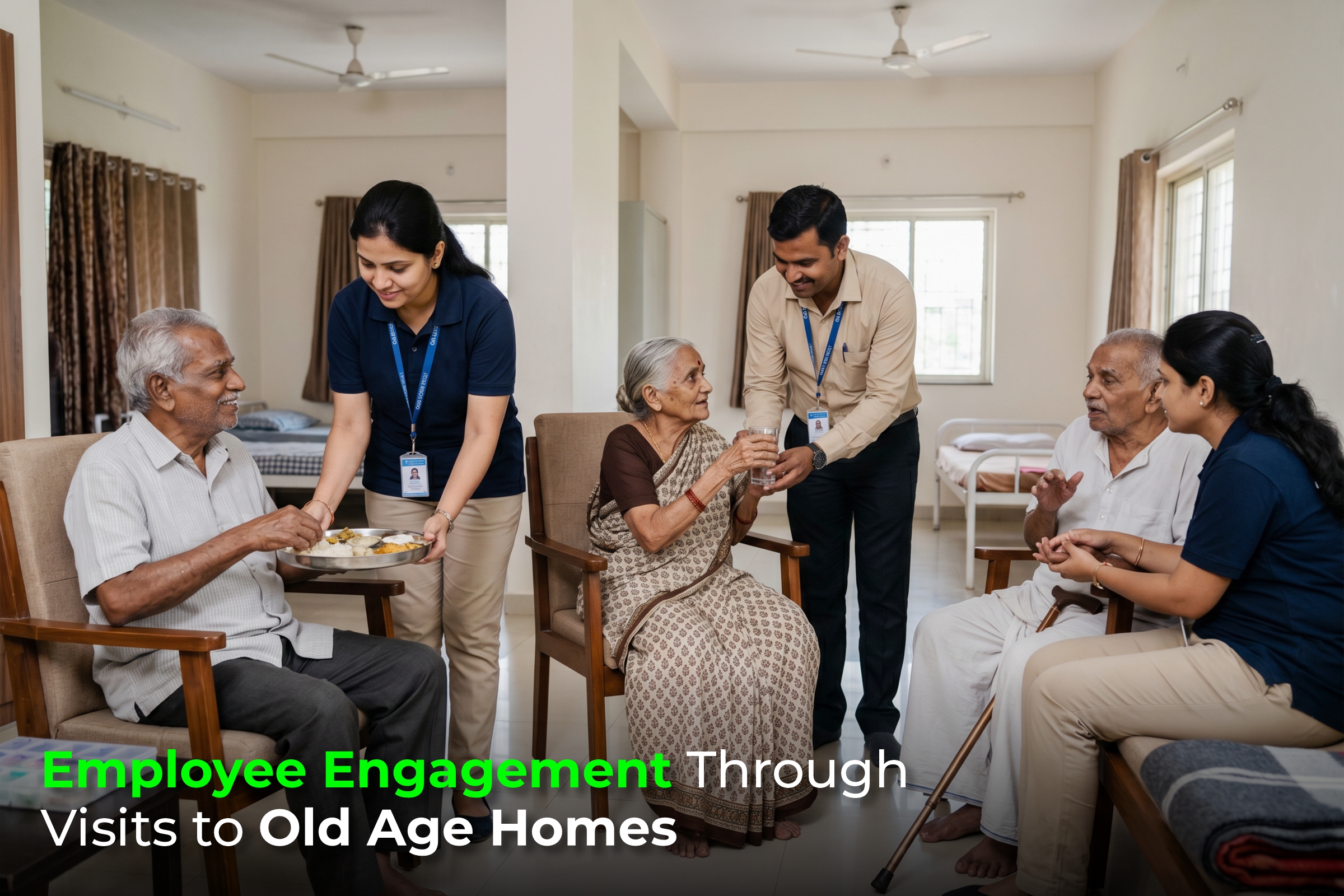
All residents are given nutritious daily meals, a safe place to sleep, medical treatment, physiotherapy and access to free medicines daily. They are given the gift of community – cultural programs, satsang, celebrations of festivals, and the joy of being surrounded by people concerned everyday.
The team of Sadbhavna mourns, “These are the hands that made families, raised children and worked for decades. Sadbhavna Vrudhashram does not end their stories on a sad note.
Each of Sadbhavna’s wrinkled hands holds something. There’s always something to smile about for every tired soul.
In this article, you’ll discover new ways for how families can approach elder care more mindfully.
Even if professional care is not being provided, there are things that all families can do, to support their senior loved one.
Start conversations early. Avoid putting off the discussion of parent/grandparent preferences, needs, and fears until a time of illness. Open dialogues foster trust and enable planning.
Prioritize preventive care. Regular check-ups, vaccinations, vision and hearing checks, and screening can detect issues at an early age and avoid emergencies.
Look for signs of emotions. Often depression and loneliness are not visible. Check in regularly. Inquire about their feelings -their physical feelings along with their emotions.
Don’t hesitate to ask for assistance if necessary. Don’t be embarrassed if you need support for caregiving needs. Looking for assistance is not a sign of weakness; it’s a gesture of caring, whether it’s a medical professional, a respite caregiver doing a favor for a family member, or a trusted institution such as Sadbhavna.
Respect their dignity at all times. Getting older can be a frightening experience. The first thing a family member or professional caregiver can do to make sure the elderly person feels respected, heard and valued is to do so at all times.
All lives matter – all deserve a dignified ending.
They follow a Sanskrit mantra that leads their work at Sadbhavna:
दयाहीनं निष्फलं ज्ञानं नास्ति धर्मस्तु तत्र हि।
एते वेदा अवेदाः स्युर्दया यत्र न विद्यते।।
Where there is no kindness, there is no dharma and where there is no dharma, there is no knowledge.
The care of the elderly is dharma. It’s the simple, mundane act of being compassionate: Choosing to see the person behind the wrinkles; Choosing to honor the life behind the frailty; Choosing to give back in warmth and care what that person has given -Choosing to be compassionate.
The world is a world of rapidity. It is busy. It tends to be about the future not the past. If we don’t practice caring for our elders, we don’t have one of the fundamental aspects of our identity.
You Can Make a Difference Today
Sadbhavna Vrudhashram is a fully funded organization, relying on your kindness and generosity. Each rupee donated would be used to feed, medicines, shelter, and love to 700+ abandoned elders.
There’s no small donation. Every paisa turns into someone’s food. Each gift is a person’s medication. Each time you give is a chance for someone to get up with hope tomorrow.
Join our mission. Donate today.
You can buy a ticket from the red tent.
Please visit sadbhavnadham.org or contact us:
+91 85301 38001 | +91 80002 88888
Jamnagar to Rajkot is a 107 km road journey that is ideal for a solo traveler.The Jamnagar-Rajkot Highway, 107 km, is perfect for solo travelers.
All life, human, animal, and nature is deserving of love, care, and a second chance.

- 4 days Ago