


When the CM Planted a Sapling: The Story Behind Sadbhavana Vruddhashram’s Green Crusade
- 1 hour Ago
- 0 Comment
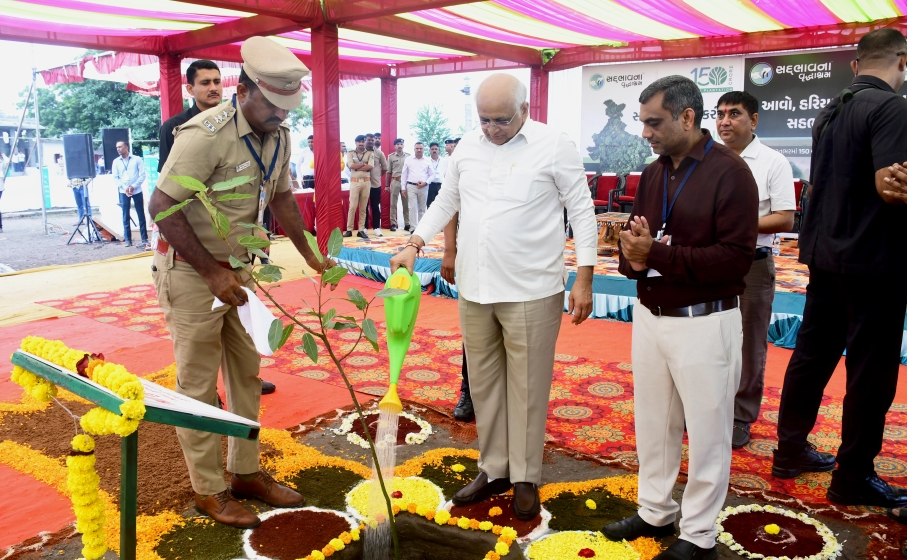
On August 14, 2026, ahead of Gujarat’s state-level celebration of the 80th Independence Day, Chief Minister Bhupendra Patel travelled to Amreli district as part of a series of public programmes. During his visit, he attended a tree plantation programme at the premises of the Shelter House on Savarkundla Road, before departing for his next engagement. It was a brief stop on a busy day but for the organization behind that Shelter House, Sadbhavana Vruddhashram, it was a moment of quiet validation for work that had been building for months, largely out of the public eye.
Because behind that single ceremonial sapling stands something far bigger: a quiet, relentless, 250-acre transformation taking shape just outside Varsada village in the same district carried out by an organization better known for caring for the elderly than for greening the land.
A Vruddhashram With a Bigger Mission
Sadbhavana Vruddhashram registered under PAN No. ABDCS1832P and CIN No. U93000GJ2020NPL111833, and based at Vinubhai Vasumal Nagecha Parisar on the Rajkot-Jamnagar Highway near Padvad Pass, Mota Rampar, Rajkot is primarily known as an old-age home. But its founders have long believed that caring for people and caring for the planet aren’t separate missions. They’re the same mission, expressed in different forms. That belief is what led the organization to Varsada village in Amreli, where it has taken on one of its most ambitious environmental undertakings yet.
The Scale of the Project
The numbers here are genuinely staggering for a grassroots initiative. Sadbhavana Vruddhashram has committed to afforesting a full 250 acres of land in Varsada village and this isn’t a distant promise. As of today, work has already been completed across 100 acres. On that land alone, the organization has planted 5,000 trees. The plan is to go much further: 12,000 more saplings are slated for plantation across the remaining acreage, at an estimated total cost of ₹4 crore.
To put that scale into perspective, this isn’t a weekend plantation drive with a few dozen volunteers and a photo opportunity. It’s a logistics operation. To complete the groundwork quickly and efficiently, the organization deployed more than 15 heavy machines JCBs, tractors, water tankers, pickup trucks, and borewell equipment alongside a dedicated workforce of over 250 laborers who worked continuously for seven days to prepare the land, dig pits, and get saplings into the ground before the window for effective plantation closed.
Why the CM’s Sapling Matters More Than It Looks
The CM’s Amreli visit wasn’t built around this one plantation stop alonw.He also prayed at the historic Nagnath Mahadev Temple earlier that day, and was praised for his warmth after spontaneously stopping his car to interact with local dignitaries a day of programmes across the district, of which the Shelter House plantation was one part.
But for Sadbhavana Vruddhashram, that stop carried an outsized meaning. It wasn’t the beginning of their story; it landed in the middle of a much larger, already-moving effort. It signaled recognition, from the highest level of the state government, that a grassroots organization’s tree-planting work had grown into something of landscape-scale significance, not merely symbolic value. A Chief Minister’s single sapling, set into ground already surrounded by thousands of others planted over the preceding weeks, became less about ceremony and more about solidarity with a movement that was already well underway.
It’s Not Just About Planting It’s About Survival
Anyone who has spent time around large-scale plantation drives knows the uncomfortable truth: planting a tree is the easy part. Keeping it alive is the real work. Sadbhavana Vruddhashram appears to understand this deeply, and its plan for Varsada reflects that understanding.
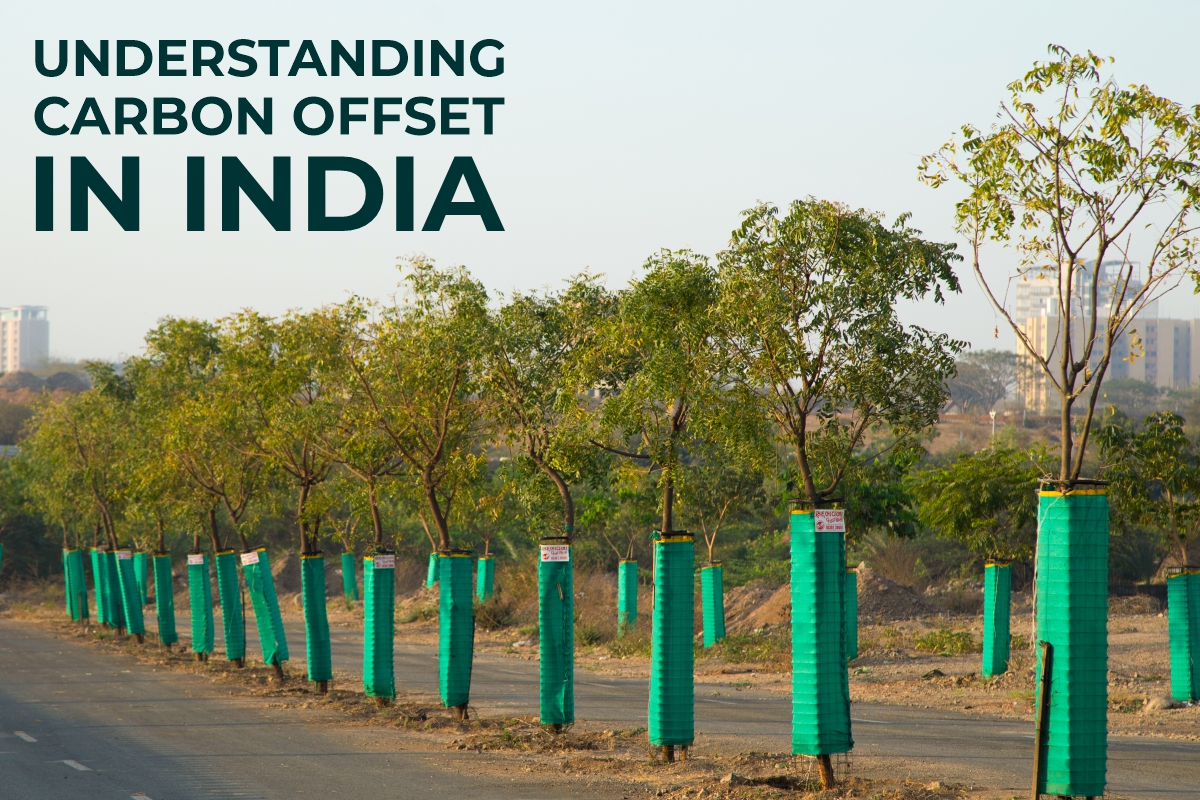
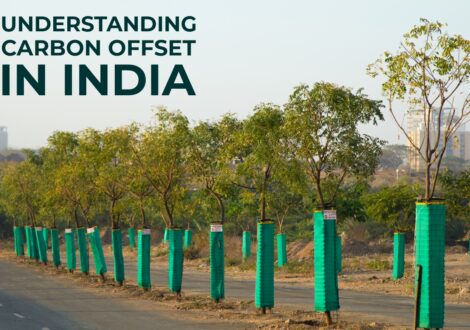
Every sapling planted is protected with a cage installed specifically to guard against nighttime damage from grazing animals. The organization has committed to watering each tree regularly for a full three years not weeks, not months, but three years of sustained care. Alongside watering, there’s ongoing monitoring of each plant’s health and growth, with full responsibility for protection and survival resting with the organization itself, not with the village or a one-time contractor.
This long-term commitment is what separates a plantation drive from a plantation movement. A tree planted and forgotten rarely survives its first dry season. A tree planted, caged, watered for three years, and monitored has a real chance to become part of the landscape for generations.
Choosing Trees That Belong
One of the most thoughtful aspects of this project is the deliberate choice of species. Rather than opting for fast-growing ornamental trees purely for visual impact, Sadbhavana Vruddhashram has prioritized indigenous and ecologically valuable species trees that have grown in Gujarat’s soil for centuries and that local ecosystems already know how to use.
Among the species being planted are Peepal, Vad (Banyan), Umro, Limdo (Neem), Karanj, Arjun, Khijdo, Baaval (Babul), Jaambu, and Rawan/Saras, along with several other native varieties. These aren’t random choices. Each of these trees plays a role in shade, medicinal value, fruit, fodder, or simply resilience in Gujarat’s climate. Beyond their environmental value, these native trees are also becoming a lifeline for birds and other wildlife, offering shelter, food, and a natural habitat in a landscape where such spaces are increasingly rare.
Part of a Much Bigger Vision
What’s happening in Varsada is not an isolated project, it is one chapter in a far larger campaign. Sadbhavana Vruddhashram has committed to what may be one of the largest green resolutions undertaken by any organization in Gujarat: a pledge to plant 151 crore (1.51 billion) trees across the state. The Varsada plantation drive is directly linked to this enormous “Sankalp,” or “resolve.
Under this state-wide campaign, the organization has already planted more than 1 crore 40 lakh (14 million) trees across Gujarat to date. And true to its philosophy, planting is only step one. For every single tree, the organization takes on the full responsibility of watering, caging, monitoring, and nurturing it for three years. As a result of this sustained, disciplined approach, more than 60 lakh (6 million) trees planted under this campaign have already grown to maturity, a survival rate that speaks volumes about how seriously the organization treats the “after” of planting, not just the “before.”
More Than a Plantation A Promise to the Future
The Varsada initiative, in that light, is not simply about covering 250 acres with greenery. It’s a statement of intent for the next generation to resolve to hand down a greener, cleaner, and more prosperous environment. By focusing on indigenous species, the project also aims to restore a natural balance for birds and wildlife that depend on trees Gujarat has always known, rather than imported ornamental varieties that offer little ecological return.
The People Behind the Project
None of this happens without leadership willing to think in decades rather than headlines. The initiative is spearheaded by Vijaybhai Dongariya, President of Sadbhavana Vruddhashram, with coordination led by Mitl Khetani, the organization’s advisor. Together, they represent the quiet, persistent kind of leadership that rarely makes front-page news on its own, the kind that shows up in the number of trees still standing three years after they were planted.
A Sapling Worth Remembering
So when a Chief Minister or any leader plants a single sapling in Varsada, it’s worth remembering what that gesture is really standing on: 100 acres already transformed, 5,000 trees already in the ground, 250 workers who spent seven sleepless days making it happen, and a three-year promise of water and care behind every single plant. The ceremony lasts a few minutes. The commitment, if Sadbhavana Vruddhashram’s track record across Gujarat is anything to go by, lasts a lifetime.


- 2 weeks Ago