


Understanding Carbon Offset in India: Why It Matters for a Sustainable Future
- 14 hours Ago
- 0 Comment
Each time a fan is powered up, traffic comes to a standstill, or a social media site is browsed, a small amount of carbon dioxide is released. When this number is multiplied by the 1.4 billion inhabitants of a country, we see a country striving hard to develop as the air above it heats up.
This is where the concept of carbon offsetting comes in as a simple and easy option for people and companies to offset their carbon emissions through nature’s absorption of carbon. At Sadbhavna, we’ve seen this principle of action being implemented thanks to a very old concept in human history, which is planting trees.
What Is Carbon Offset in India?
In simple terms, a carbon offset in India is an act that offsets the carbon dioxide emitted by you. For example, if you produce CO2 through factory operations, energy usage, or routine trips, then to offset carbon production, someone can perform acts that eliminate the exact amount of carbon dioxide from the Earth’s atmosphere.
For example, resorts turn to renewable energy or use clean cooking fuel. Trees are one of the oldest tools for carbon offsetting. A single healthy tree can absorb an approximate amount of 20-25 KM of CO2 yearly.
Why Carbon Offsetting Matters for India Right Now
India has some of the fastest-developing cities in the world, but such development brings about increasing emissions, dwindling green cover, and more unpredictable weather. Heat waves have become prolonged, monsoon rains have become irregular, and air quality goes beyond acceptable limits in many cities.
Carbon offset in India is not an attempt to reverse progress; it aims for environmental sustainability. The commitment of India to put 33% of its territory under tree cover implies that every single person or organization partaking in carbon offsetting is contributing to the greater cause.
How Tree Plantation Powers Carbon Offsetting
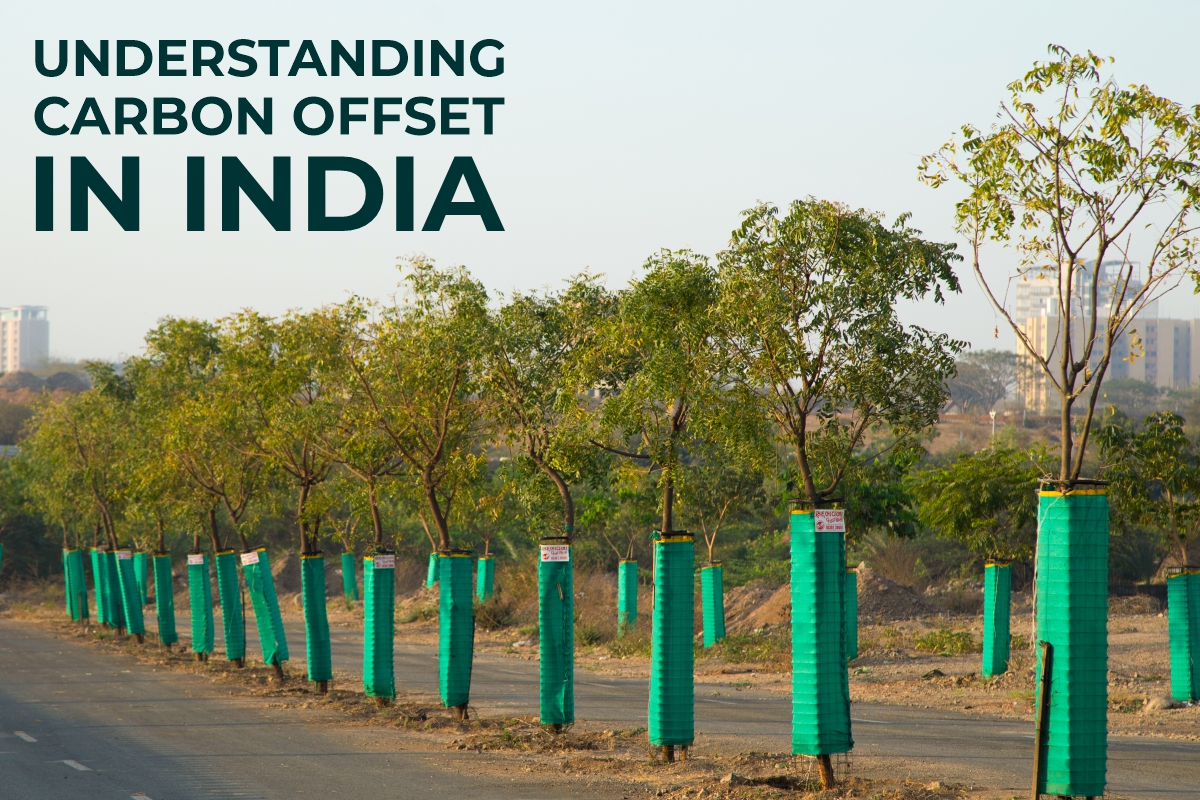
Tree planting is perhaps the most practical and sustainable offset technique. Trees not only reduce carbon in the atmosphere; they cool the soil, raise groundwater levels, and provide habitat for various birds and insects. This is the concept behind our tree-planting campaign.
We have selected species such as Banyan, Peepal, Neem, and Tamarind that are native and can live for centuries, which allows them to store carbon for years. More information about this relationship between trees and people can be found in our blogs The Silent Healer: How Trees Can Save Our Future and Generations Before Us Planted Trees for Our Tomorrow.
Simple Ways You Can Offset Carbon in Daily Life
Getting started doesn’t require a lot of money. Little things taken every day can accumulate:
- Sponsor a plant for and promote environmental sustainability and corporate sustainability.
- When possible, opt for public transportation or share a ride.
- Support carbon credits and tree-planting programs instead of one-off greenwashing programs.
- At home, practice reducing, reusing, and recycling to decrease indirect emissions.
If you’re not sure whom to trust with your money, read our blog Why Sadbhavna Is Working Towards Creating The Largest Tree Plantation Community and Most Effective Tree Plantation NGOs in Gujarat.
How Businesses Can Offset Carbon Through CSR?
Carbon offsetting, in particular for firms, is not only appropriate from a moral point of view, but it is also beneficial from a governance perspective. Based on Schedule VII of the Companies Act, CSR tree plantation initiatives should qualify as CSR spend, while Section 80G brings more tax advantages.
The corporate sector is able to transform CSR into a real practice through matters such as tree plantation campaigns, sponsorship of seedlings, or employee volunteer activities to promote corporate sustainability. This topic is covered in greater detail in CSR in India: How Companies Can Partner with NGOs, a guide for CSR managers who want their ideas to affect not just on paper. Companies can also get carbon credits as per their donations made.
Sadbhavna Dham’s Role in Carbon Offset Journey
Since 2015, our organization has progressed exponentially from a single initiative. In addition to serving more than 700 elderly abandoned persons, we have planted over 11 million trees in villages, roads, and community lands of Gujarat utilizing the Miyawaki technique that guarantees survival of planted trees. Each rupee that has been donated is accounted for and explained clearly in What Your Donation Actually Does and What Happens After You Donate. It is not only the numbers that count; it is the importance of understanding where your money is going.
A Greener Tomorrow Starts with One Small Step (conclusion)
Carbon offsetting does not have to be an expensive or complicated affair in India. It only requires one single tree, a single decision, and a little bit of care for the future of all of us. Each tree sapling planted today is a little promise kept for tomorrow’s air, water, and soil.
Plant a tree with Sadbhavna today and be part of an expanding community that aims at converting goodwill into a greener and environmental sustainability in India.
Frequently Asked Questions
Is tree plantation an effective way to offset carbon?
Indeed, trees consume CO2 during their life cycle, and locally grown trees, which have a lengthy lifespan, create benefits of absorbing CO2 environmentally for many years.
Can individuals offset carbon without spending money?
Of course! Waste reduction, electricity saving, and public transport choices positively affect carbon emissions, in addition to participation in supporting various events dedicated to planting trees.
How is carbon offsetting different from carbon reduction?
Reduction implies less emission initially. Whereas offsetting implies achieving zero emissions that cannot be avoided by carrying out projects, such as tree planting, and thus making a zero impact on the environment.
Does the Indian government support carbon offset efforts?
Yes. The Indian government recognizes the importance of trees, and that is why several afforestation programs are established by local community NGOs.
How do I know how much carbon I need to offset?
It is possible to determine the approximate weight of carbon by using free online calculators that account for parameters such as your travels, electricity consumption, and lifestyle.


- 7 days Ago