


Gujarat is among the most environmentally complicated states in India. The 1600 km long coastline, the expansive wetlands of the Rann of The Kutch, the ancient forests of gir and one of the most intense developmental pressures. The rivers running through the state have been among the most polluted rivers in India, its industrial belts have attracted criticism of national pollution agencies and its coastal ecosystem is under increasing pressure due to extraction and climate change.
However, it is against this context that increasingly organisations are retaliating in courts, classrooms, community halls and restoration sites. This paper is a profile of the top ten environmental NGOs that are currently in operation in Gujarat:their identities, their activities and their relevance.
- Sadhbavan Vrudhashram
Rajkot · Est. 15 August 2015 · Tree Plantation & Community Conservation
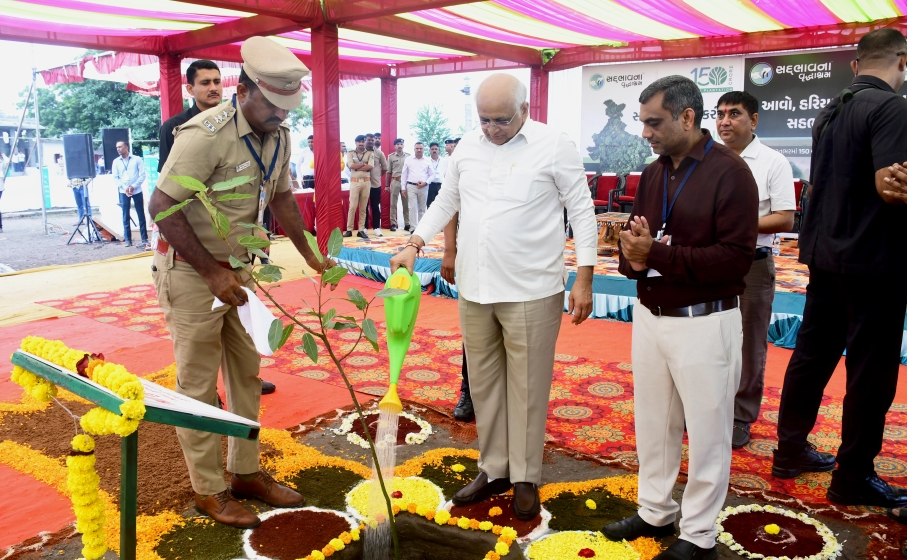
Sadhbhavna Vrudhashram is an NGO based in Rajkot, which is based on compassion and serving the community, and it was resolved that there was no time to wait. Coupled with their all-too-human endeavor to take care of the weakest of the weak in the society, Sadhbhavna has adopted tree plantation as one of their missions – a living, growing investment in Gujarat of tomorrow. They have a very basic but deep belief: the society that takes care of its seniors should take care of the earth that the seniors will be leaving behind.
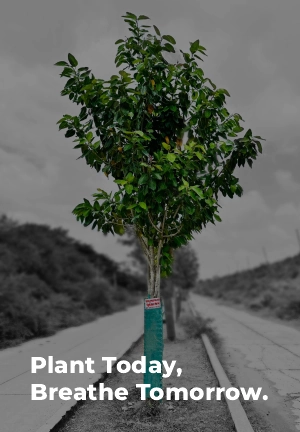
Through their village adoption programme, Sadbhavna plants around 2,000 trees in every adopted village. Each community becomes part of the process from choosing locations to helping water and maintain the plants. It is not just an environmental project; it is a way of bringing people together to create something lasting and meaningful. Sadbhavnadham
Their vision is to witness Gujarat green from Google Maps, and their larger national ambition is to plant and nurture 150 crore trees across India. Sadbhavnadham They partner with local schools, NGOs, corporate groups, and environmental organisations to expand their reach, making each plantation drive more impactful and bringing awareness to the importance of sustainable living. Sadbhavnadham
Focus areas: Large-scale tree plantation, Miyawaki dense forests, village adoption and community greening, elder care, animal shelter, and environmental awareness.
- Paryavran Mitra
Ahmedabad: Founded in 1997 – Environmental law and advocacy.
The most well known environmental legal organisation in Gujarat is paryavaran mitra. It was established in 1997 as a unit of JANVIKAS but was made an independent institution in 2015 and has since established a reputation of strict, court based accountability, a strategy that is unusual among Indian state level NGOs.
It has logged and pursued public interest litigations against industrial pollution, breaches of coastal regulation and failure in procedure in environmental impact assessments in a period of more than 20 years. The most notable programme. It is training regular community members as so-called enviro paralegals individuals capable of operating within the complex environment law and represent their villages before regulatory bodies.
Paryavran Mitra is an observer in the UNFCCC, and in 2018 was granted UN ECOS special consultative status. It has an environmental newsletter in the 227th issue . which is distributed to more than 1400 subscribers such as government departments, academic institutions and civil service organisations in India.
Area of focus: PIL and environmental law, industrial pollution responsibility, RTI advocacy community Enviro training of Paralegais, climate justice, EIA public hearings.
- Center for Environmental Education (CEE)
Ahmedabad – Founded in 1984 environmental education and sustainable development
One of the oldest environmental institutions in India is the Centre of Environment Education CEE was established in 1994 as a Center of Excellence by the ministry of environment and forests and expanded its headquarters in Ahmedabad to become a national organization with 421 offices in India and international offices in Australia and Sri Lanka.
Its main agenda is to create awareness and knowledge of the environment by the masses. It is knowledge of the environment by the masses. It operates on a massive scale of programmes, some attaining up to 200,000 schools in the country and higher education partnership, rural livelihoods and waste management activities.
CEE has acted as a notable organization to key UN led programmes in India, such as the UNESCO Decade of education for sustainable developement, UNICEF WASH, and UNDP Global Environmental Facility Small Grants Programme. In Gujarat, its activities include marine conservation, biodiversity education and sustainable living demonstration projects.
Themes: environmental education (school and university), biodiversity conservation,marine ecosystem, climate change communication waste management, globe ESD programmes.
4.Viksat Nehru Foundation Of Developement
Ahmedabad Field officer Kutch, Sabarkantha Patan Est. 1977
In 1977, VIKSAT, the vikram sarabhai center of development interaction was created as a branch of the nehru foundation of development, which had been created in 1966 to honour physical Dr. Vikram Sarabhai. With close to 5 decades, VIKSAT has enquired experties in community based management of natural resources in Gujarat and outside.
In contrast to organisations that are led by advocacy, the strength of VIKSAT is a grassroot implementation. It has operated in seven Gujarat districts directly evolving over 50,000 families in its programmes on forests, water sustainable agriculture, and women -empowerment. It works with more than 800 partner NGOs, community organisations, schools,and institutions across the state.
VIKSAT is an acknowledged partner to NITI Aayog and ITC in 27 aspirational districts of eight states and a regional resources agency of the ministry of environment, forest and climate change. Its driving belief is that effective conservation should focus on putting the rights and livelihoods of the local communities at the center of conservation and not dictate solutions to them.
Areas of concern: natural resources management, forestry, watershed development, sustainable agriculture, biodiversity, empowering women, building community institutions.
5. CATCH Foundation
Ahmedabad · Founded in 2017 · Urban Afforestation.
CATCH Foundation is a non-governmental organization that is led by citizens and is concerned with the reinstatement of green cover in and around the urban centres of Gujarat. It was established in 2017 and has established a volunteer network of more than 500 active volunteers that plan, implement, and monitor plantation drives on degraded land in Ahmedabad region.
It is scientific and not symbolic in its approach. Instead of planting trees and walking away, CATCH follows up on the level of survival and ecological diversity at a certain location. The flagship project of Sanand has created a forest of more than 9,000 trees on the barren land (3.8 acres). Thousands more trees have been brought into the green cover of the city by other large-scale projects at Raysan and around Gujarat Technological University. The organisation has also planted more than 100,000 trees together in the project areas.
Areas of focus: Urban afforestation, high density forestation, tree survival, community volunteerism, urban green cover restoration.
6. Gujarat Programmes, Wildlife Trust of India
.
Pan-India organisation, in operation in Saurashtra Coast and Gir Region.
Wildlife Trust of India is a national conservation organisation whose most renowned project in Gujarat focuses on whale shark conservation along the Saurashtra coast -which is considered one of the community-based conservation success stories of India.
Whaling was a common practice by fishing communities along Gujarat coast up to recent decades. WTI collaborated directly with such communities to learn about the local livelihoods and create a real alternative: pride in protection. WTI contributed to the transformation of former hunters into active wildlife preservationists through ecological knowledge, livelihood assistance and continued community involvement. The fishermen of Gujarat are today some of the staunchest supporters of the whale shark. The programme is one of the testaments to the fact that conservation and community welfare can turn out to be heading in the same direction with a cautious application of pressure.
Areas of Focus: Marine wildlife protection, whale shark protection, community conservation, coastal habitat protection, wildlife research and policy advocacy.
7. Paryavaran Suraksha Samiti (PSS).
Vadodara Industrial Pollution Watchdog.
One of the most relentless industrial pollution control organizations operating in Gujarat (based in Vadodara), is Paryavaran Suraksha Samiti, which targets the strongly industrialised interior of the state. Headed by long time activists like Rohit Prajapati and Krishnakant, PSS has over decades documented effluent violations, lodged complaints with the Central and Gujarat Pollution Control Board and taken to the National Green Tribunal and the Supreme Court.
One of its most important campaigns is its long term struggle on prohibition of unlawful effluents emission along the Golden Corridor of Gujarat – the 400km industrial belt that runs along Vapi to Mehsana. PSS has reported violations of effluent treatment plants in 14 districts leading to regulatory action and closure notices. It has also contested violations of the coastal regulatory zones, nuclear power plant clearances and lignite mining catastrophes that threatened groundwater at the Bhavnagar villages.
PSS is a blend of heavy documentation of technical specifications and perseverance which would lead to repeating the violations every year as the regulators would fail to act. Its output is a reflection of the civil society accountability in a state where the industrial interests have a substantial political influence.
Areas of Focus: Golden Corridor effluent, monitoring industrial pollution, RTI and complaint based accountability, advocacy at the National Green Tribunal, ground water protection.
8. VIKALP
Ahmedabad · Started in 2002 · Agroforestry, Climate Change, and Indigenous Livelihoods.
VIKALP, which translates to an alternative, is a voluntary organisation that collaborates with indigenous and marginalised groups in Gujarat on the nexus between climate change, sustainable agriculture, agroforestry and natural resource management. It is registered with Special Consultative Status with UN ECOSOC and officially accredited with UNFCCC, UNCCD and Convention on Biological Diversity.
Its work has its foundation based on the belief that ecological sustainability and community rights are inseparable. The Bhoomi Collective of VIKALP unites more than 5,000 indigenous agro forest producer families in South Gujarat, assisting in the traditional and regenerative cultivation of indigenous grain varieties, such as millets, as a livelihood strategy and as a measure to preserve biodiversity. In 2023, it introduced a special campaign to celebrate the UN International Year of Millets, relating ancient farming practices to modern climate change adaptation.
VIKALP also organizes the Stand for Land movement, which supports the protection of agricultural land against industrialisation and soil erosion. It has planted more than 100,000 trees and has linked more than 5,000 families to sustainable agricultural networks in 2023 alone.
Areas of interest: Agroforestry, native seed conservation, climate-resilient agriculture, natural resource management, women empowerment, SDGs, community biodiversity networks.
9. Prayas Team Environment
Surat Environment Education Wildlife Rescue and Nature Conservation.
Prayas Team Environment is a nonprofit organization with its headquarters in Surat which has spread South Gujarat with a mixture of environmental education and direct action on wildlife. Prayas, or an honest effort, in both Hindi and Gujarati, indicates its spirit: practical, long-lasting and unpussy devotion to nature.
The education programmes are delivered to schools (urban and rural South Gujarat) in the form of presentations, films, nature camps, quiz competitions, street plays and puppet shows – all of which are created in such a way that they make environmental awareness truly accessible. Prayas also, together with education, runs a running wildlife rescue and rehabilitation service that serves injured birds, reptiles and animals in the Surat region. It belongs to the Wildlife Rehabilitators Exchange Network of the Wildlife Trust of India and cooperates with Gujarat Forest Department. It also operates the Surat Tree Watch project that monitors the urban tree cover in a fast growing city.
Key Areas: Environmental education (communities and schools), wildlife rescue and rehabilitation, nature conservation, animal welfare, urban tree watch.
10. Gujarat Environmental Programmes, Ambuja Foundation.
Pan-Gujarat Coastal and Water Resource Management.
Ambuja Foundation has one of the largest rural environmental programmes running in Gujarat, and especially in water resource management and restoration of coastal ecosystems along the Saurashtra belt.
The reconstruction of a tidal regulator that had fallen out of use since 1986 in Kodinar, Junagadh district is one of its most quoted projects. The restoration was finished in the year 2009 and it was done by the Foundation and it covers farmland against the intrusion of saline water. Its extended water programmes have now extended to 78 coastal villages, and its micro-irrigation projects have transformed more than 6,000 hectares of land into water-saving crop production – and 500 more hectares are undergoing the same every year. It administers a Krishi Vigyan Kendra in Junagadh that assists farmers in sustainable practices. Its plastic garbage handling program in Vadnagar operated by the Self-Help Groups has generated environmental value as well as community livelihoods.
Areas of Focus: Coastal water management, micro-irrigation, plastic waste, sustainable agricultural development, ground water monitoring, rural community development.
11. environmentalist foundation of India – Gujarat operations.
Pan-India organisation (18 states) · Operating in Gujarat · Freshwater Habitat Restoration.
The Environmentalist Foundation of India is a wildlife conservation and habitat restoration trust whose hall mark is the scientific restoration of freshwater bodies lakes, ponds and wetlands which have become victims of encroaching, polluting, and neglecting forces. Operating in 18 states of India with Gujarat being one of them, EFI is not an event-based organisation: restoration works happen not among strangers, but through the mobilisation of volunteers and their further follow-up.
EFI operates in Gujarat on freshwater lakes and ponds that provide ecological and community water amenities – amenities commonly neglected in conservation discourse dominated by forests and coasts. It has a Science Badge programme that recognizes and educates school-based young conservation leaders. The weekend cycle tours to lakes and habitats bring urban citizens in touch with ecosystems which they do not meet in their everyday activities. The concept of revisiting sites over and over again to guarantee authentic, sustainable restoration as put forth by EFI can be taken as a valuable contrast to the so called plant and leave strategy that has sabotaged numerous well-meaning attempts in India.
Areas of Focus: Freshwater lake and pond restoration, community based conservation, youth environmental education, habitat documentation, volunteer mobilisation.
The Reason This Work is Not Optional.
The environmental issues in Gujarat such as erosion of coastal areas, rivers and groundwater contamination by industries, gradual wetland loss, and increasing climate change effects on agriculture and fisheries do not correct themselves. They demand long, dull work: complaints made and re-made, trees planted and tended over years, communities educated and re-educated and revisited, courts again petitioned where orders are disobeyed.
The organisations that have been described herein represent the entire gamut of that endeavor – legal warriors, and grassroots educators, freshwater restorers and community forestry builders. The fact that they have survived, and are free of the pressures that limit state action, does not appear as a footnote to the story of Gujarat development. Its sustainability is preconditioned by it.



- 3 weeks Ago