

One Tree, One Family, One Legacy: Why Your Tree Donation Matters More Than You Think
- Today
- 6 Min Read
- 0 Comments
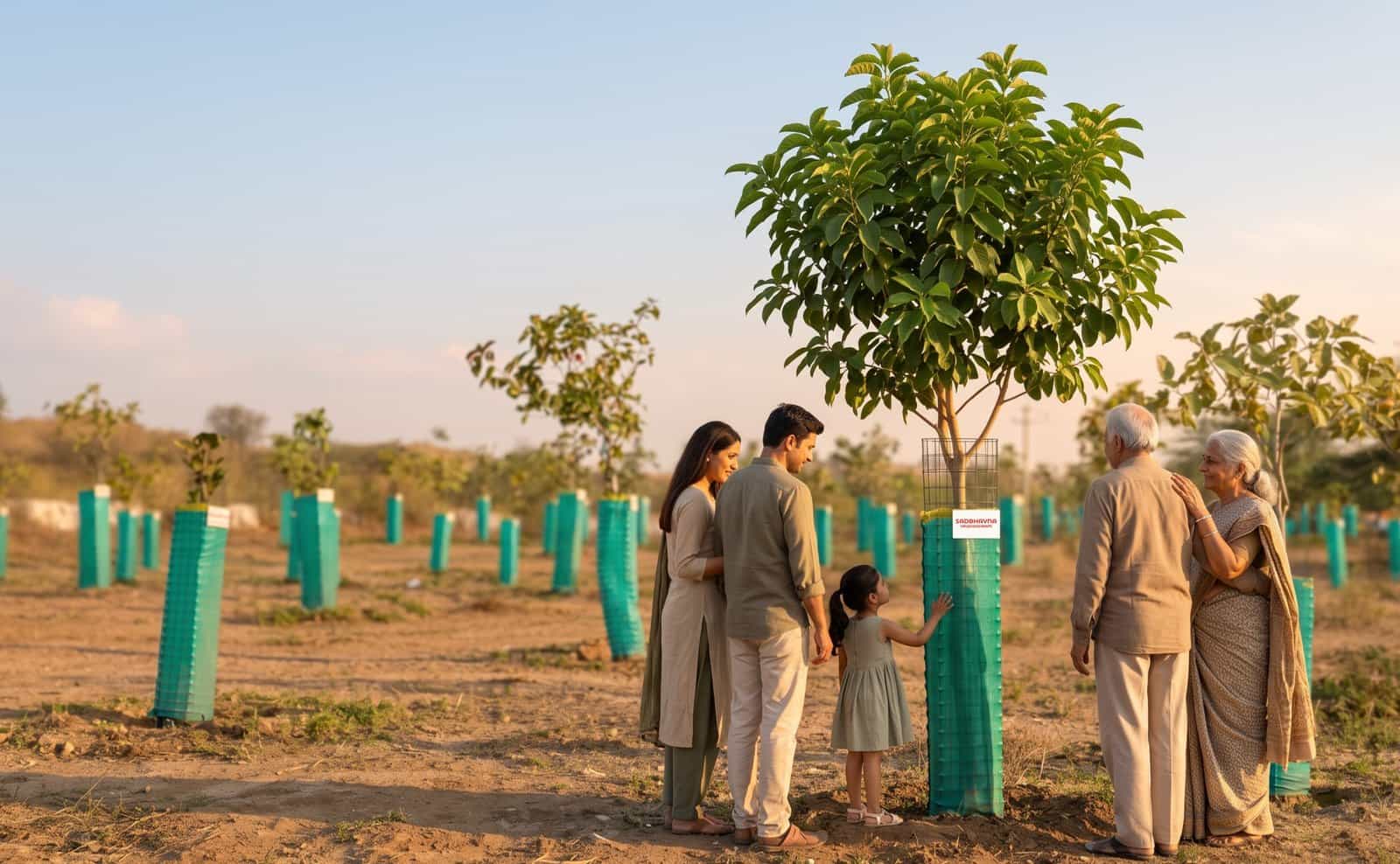
Somewhere in India right now, a tree is being watered by a volunteer who will never meet the person who funded it. A sapling planted last monsoon is putting down roots in soil that was bare a year ago. A tree guard, bought with someone’s small donation, is quietly doing its job keeping goats and careless feet away from a plant too young to defend itself.
This is what a tree plantation donation actually looks like on the ground. Not a symbolic gesture, but a working chain of people, money, and patience that turns a few hundred rupees into a living thing that will still be standing long after everyone involved has moved on.
What a Tree Donation Really Buys
It’s Rarely Just “a Tree”
Most people assume a tree donation means paying for a sapling and walking away. In reality, credible organisations bundle in far more than that. A single contribution often somewhere between ₹100 and ₹250 depending on the NGO typically covers the sapling itself, a protective tree guard to keep it safe from grazing animals, the labour to plant it correctly, and follow-up care for months or even a full year until the tree is considered self-sustaining.
Some organisations go a step further, using GPS-tagging to mark the exact location of every tree planted, so donors can see precisely where their contribution ended up not just a photo, but a pinned coordinate on a map. This kind of tracking has become one of the clearer signs of a serious plantation programme, because it makes survival rates verifiable rather than just claimed.
Why Aftercare Is the Part Nobody Talks About
Planting a sapling takes minutes. Keeping it alive takes months of unglamorous, unfilmed work watering schedules through dry spells, replacing damaged tree guards, and checking on saplings that have no way of asking for help. NGOs that report their survival rates honestly, rather than only publicizing plantation-day photos, tend to be the ones actually building forests rather than just planting for the camera.
Why Families Choose Trees Over Traditional Gifts
A Gift That Grows Alongside the People You Love
Across India, tree donations have become a quiet but growing way to mark family milestones not as a replacement for celebration, but as an addition to it.
- A child’s birth a tree planted the year a baby arrives grows up in step with them, becoming a living marker of their age.
- At weddings some couples now ask guests to fund trees instead of gifts, turning a celebration into the start of a small grove.
- A death in the family memorial plantations have become one of the most common ways families honour someone they’ve lost, giving grief a place to grow rather than simply fade.
- On a reunion or anniversary some families return to the same plantation site each year, adding one more tree to a grove that tells their story over time.
One Family, Many Trees, One Legacy
What makes this different from most charitable giving is the physical permanence of it. A cheque disappears into an organisation’s accounts. A tree stands in a specific place, for a specific person, and can be visited, photographed, and watched as it grows a legacy you can actually walk back to.
Choosing a Tree Plantation NGO in India
What Separates a Credible Programme From a Photo-Op
India has no shortage of organisations running plantation drives from grassroots trusts working in a single district to large NGOs planting across multiple states. Not all of them deliver equally. Before donating, it’s worth checking a few things:
- Species selection does the NGO plant native or regionally appropriate species, or fast-growing varieties chosen mainly for volume?
- Tracking and transparency do they offer GPS coordinates, photos, or a certificate tied to your specific donation?
- Aftercare duration is there a stated care period (commonly six months to a year) with watering and tree-guard maintenance included?
- Community involvement: are local farmers, schools, or village groups involved in planting and upkeep, giving the project local roots beyond the funding?
- Reported survival rates: does the organisation share how many of its trees actually survive, not just how many were planted?
Some of the more established names in this space including foundations running large-scale, technology-tracked plantation drives, and grassroots trusts working district by district have built their reputation specifically around this kind of transparency. It’s worth spending ten minutes checking an NGO’s track record before donating, the same way you’d check reviews before any other purchase.
The Environmental Case: Why This Matters Beyond Sentiment
An Environmental Donation With Compounding Returns
Beyond the personal and emotional value, an environmental donation toward tree plantation addresses some of India’s more pressing ecological pressures directly:
- Urban heat tree cover in cities has a measurable cooling effect, something increasingly relevant as summer temperatures climb across much of the country.
- Groundwater and soil root systems help rainwater soak into the ground rather than run off, while also holding soil in place on slopes and riverbanks prone to erosion.
- Air quality dense urban and peri-urban plantation drives are increasingly used specifically to counter local air pollution, alongside their broader carbon benefits.
- Biodiversity recovery native species plantations create habitat corridors for birds, insects, and small mammals that have lost ground to construction and farmland expansion.
- Livelihood support many plantation programmes hire local labour for planting and long-term maintenance, meaning your donation also supports rural income, not just tree cover.
Large-scale corporate and institutional plantation efforts from campus greening projects to multi-thousand-tree drives on government or defence land show how this model scales, but the same principle holds true at the level of a single individual funding a handful of trees: the impact compounds well beyond the initial planting.
How to Start Your Own Tree Legacy
From One Donation to a Growing Tradition
If you’re considering your first tree donation, the process is usually simpler than expected:
- Choose a cause or occasion: a birthday, anniversary, memorial, or simply a personal commitment to giving back.
- Pick a tree planting charity with a transparent track record check for GPS tracking, survival reporting, and aftercare commitments before donating.
- Decide how many trees to fund even a small number, planted consistently over the years, can grow into a meaningful personal grove.
- Keeping the record you receive of certificates, coordinates, or photos is what lets you return to “your” tree years later.
- Consider making it a yearly habit. Some of the most meaningful tree legacies aren’t single donations, but a small tradition repeated every year, at every birthday or anniversary, until it becomes a small forest with your family’s story written into it.
A Legacy That Doesn’t Need You to Keep Growing
The quiet power of a tree donation is that it doesn’t depend on your continued attention to keep working. Once planted and past its first year, a tree keeps absorbing carbon, holding soil, sheltering birds, and cooling the air around it with or without anyone watching.
One tree funds a small, working ecosystem. One family, giving consistently, can leave behind a grove. And one grove, multiplied across thousands of donors doing the same thing, is how forests actually get rebuilt in a country that badly needs them back.
That’s the legacy sitting inside every tree plantation donation not a single grand gesture, but a small, patient promise that keeps its word long after you’ve stopped thinking about it.