

Imagine a World Without Trees: Is This the Future We Want?
- Today
- 6 Min Read
- 0 Comments
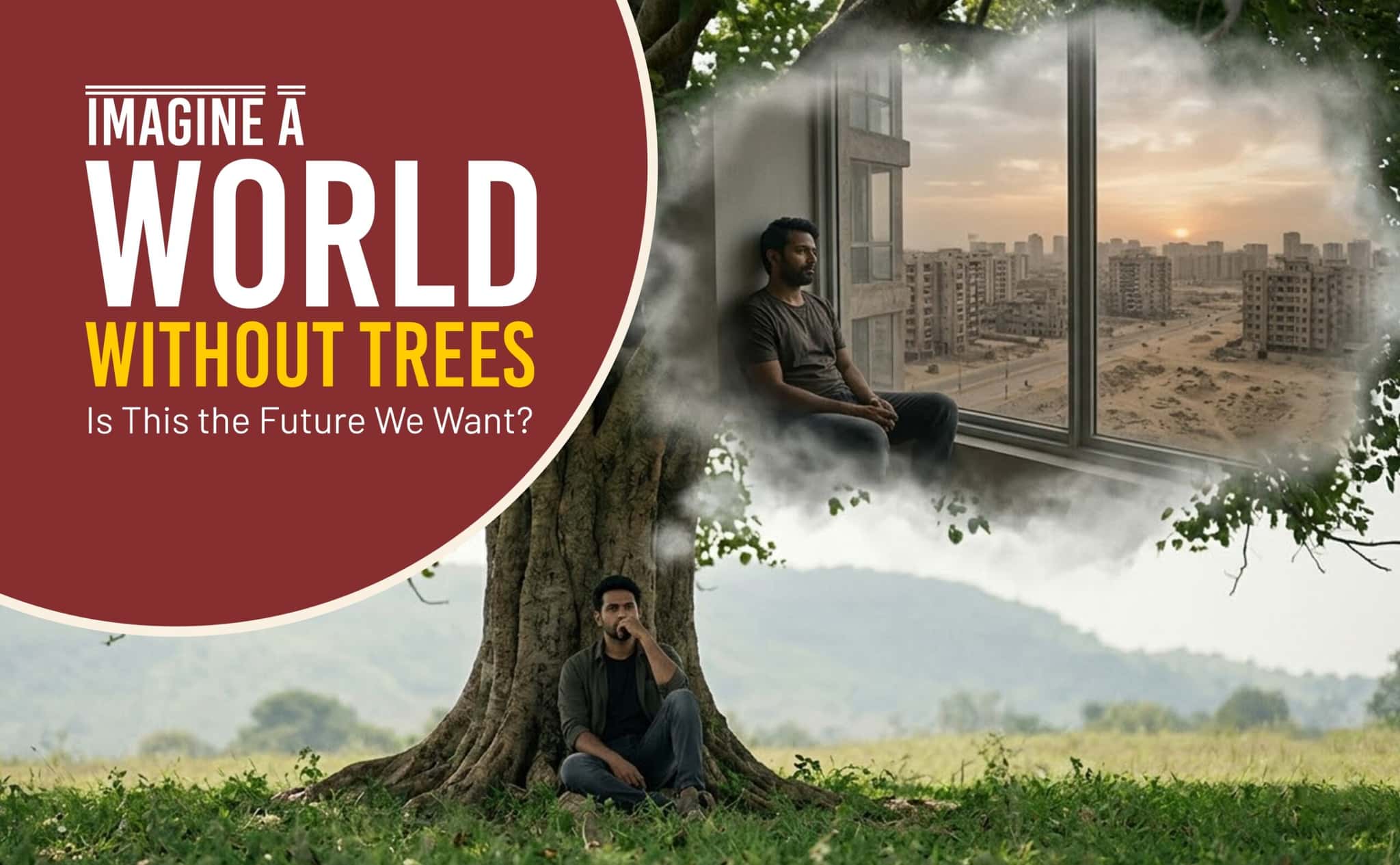
Imagine tomorrow you awaken to a world without trees. No shadowed streets, no forests, no birdsong and no green on the horizon. It becomes hot, heavy and the soil dries, the rivers dry up. It’s like science fiction, but each year millions of hectares of forest vanish. The question is not whether we can imagine this future, but whether we would like to prevent it.
In this blog, we explore the impacts of trees on us, the consequences of forest destruction on climate change, the latest forest data and what small steps can be taken to help safeguard the planet we are all reliant on.
Why Trees Matter More Than We Think
The importance of trees in daily life
The importance of trees goes far beyond their beauty. Trees clean the air by absorbing carbon dioxide and releasing oxygen. They cool cities by providing shade, reduce noise, hold soil in place and help rain soak into the ground instead of running off. A single street lined with trees can be noticeably cooler than one without.
Trees also support the people around them:
- Food and medicine: Forests provide fruit, nuts, timber, fuel and many plants used in traditional and modern medicine.
- Livelihoods: Millions of people depend on forests for income, shelter and cultural identity.
- Health: Green spaces are linked to lower stress and better mental well-being.
Trees are home to life on Earth
Forests are among the richest habitats on the planet. They shelter countless species of animals, insects, birds and plants, many of which exist nowhere else. When a forest is cleared, the species that depend on it lose their home, and the loss often cannot be reversed.
Deforestation and Climate Change: A Dangerous Link
How forests protect the climate
Forests are natural climate regulators. Primary tropical forests like the Amazon, the Congo Basin and the rainforests of Southeast Asia are important carbon sinks, where massive quantities of carbon trapping CO2 are absorbed. They also emit water into the atmosphere, affecting rainfall outside the forest.
What happens when forests disappear
Deforestation/climate change is a two-way street. Carbon that is stored in a tree evaporates into the atmosphere when the tree is cut or burned, leading to an increase in global warming. With a warmer drier climate, forests are even more susceptible to drought and fire, and the more frequent fire results in more forest loss. Scientists say fire is becoming a “global force” in forest destruction.
Deforestation equates with the loss of a natural barrier to flooding, landslides and extreme weather. Heavy rainfall is much more devastating without the roots of trees to retain soil and to slow the water.
Where Do We Stand Today? The Latest Numbers
Some progress, but not enough
The newest satellite data offers both hope and a warning. Tropical rainforest loss fell 36% in 2025 compared with the record high of 2024. Brazil played a big part in that drop, as it cut non-fire primary forest loss by 41% and reached its lowest level on record. That shows policy and enforcement can work.
But the picture is still serious. In 2025, the world lost 4.3 million hectares of tropical primary rainforest, an area roughly the size of Denmark, and that loss remains 46% higher than a decade ago. Analysts also warn that the decline may reflect fewer fires rather than lasting progress, and that countries remain far off track from their 2030 goal of ending deforestation.
In other words, we have slowed the damage, but we have not stopped it. A world without trees is still a risk, not a distant fantasy.
Environmental Protection Starts With Forests
Why protecting existing forests comes first
Mature forests store more carbon and support more wildlife than young plantations. Protecting what already stands is usually faster, cheaper and more effective than trying to replace it. Strong environmental protection therefore begins with:
- Enforcing laws against illegal logging and land clearing
- Recognizing and supporting the land rights of Indigenous and local communities who manage forests
- Cutting fire risk through better land management
- Choosing supply chains that avoid products linked to forest destruction
The role of reforestation
Planting trees matters too, but it works best alongside protection. Reforestation should use native species, suit the local ecosystem and include long-term care so that young trees survive. Planting millions of seedlings that die within a few years helps no one.
Ways to Save the Environment Starting Today
Big policy changes need public support, and everyday choices add up. Here are practical ways to save the environment that anyone can start now.
At home
- Plant a tree or start a garden. Even a small patch of green helps cool the area and supports local insects and birds.
- Reduce paper use. Go digital where you can, and recycle the rest.
- Choose certified wood and paper products from responsibly managed forests.
- Cut food waste. Less waste means less land is needed for farming.
In your community
- Join a local tree-planting or clean-up drive.
- Support urban green spaces, such as parks, avenues and school gardens.
- Share what you learn. Awareness spreads faster when friends, families and schools talk about it.
As a consumer and citizen
- Check the labels on palm oil, soy, beef and timber products for sustainability certifications.
- Support organizations that protect forests and restore degraded land.
- Vote and speak up for policies that protect forests and cut emissions.
Each of these actions is small. Together they create demand for a future where forests are valued more as living systems than as raw material.
What Would the Alternative Look Like?
Let’s return to that world without trees. Cities would be hotter because shade and natural cooling would be gone. Farmland would lose its protection from wind and erosion. Rivers would carry more silt and less water. Wildlife would shrink to a fraction of what we know today, and the climate would shift faster than people and ecosystems could adapt.
No single country, company or person would escape those effects. That is why protecting trees is not only an environmental issue. It is an economic, health and security issue too.
Final Thoughts
The idea of a world without trees is uncomfortable for good reason. Trees give us clean air, stable weather, fresh water, food, shelter and beauty. The latest data shows that action works: when governments, communities and individuals commit to protecting forests, the numbers improve. The same data shows the work is far from finished.
The future is still being decided by the choices made now. Protect the forests that remain, restore the ones that have been lost and make small, steady changes in your own life. Because the real question is not just whether we can imagine a planet without trees, but whether we are willing to make sure it never happens.