

India does not need another reminder that the summers are getting hotter, rainfall patterns are changing and getting scantier, and the green spaces are becoming harder to find in many regions of the Indian nation. We see it on the roads that once had trees, but now feels hotter; and in familiar open spaces that slowly gets converted into construction sites.
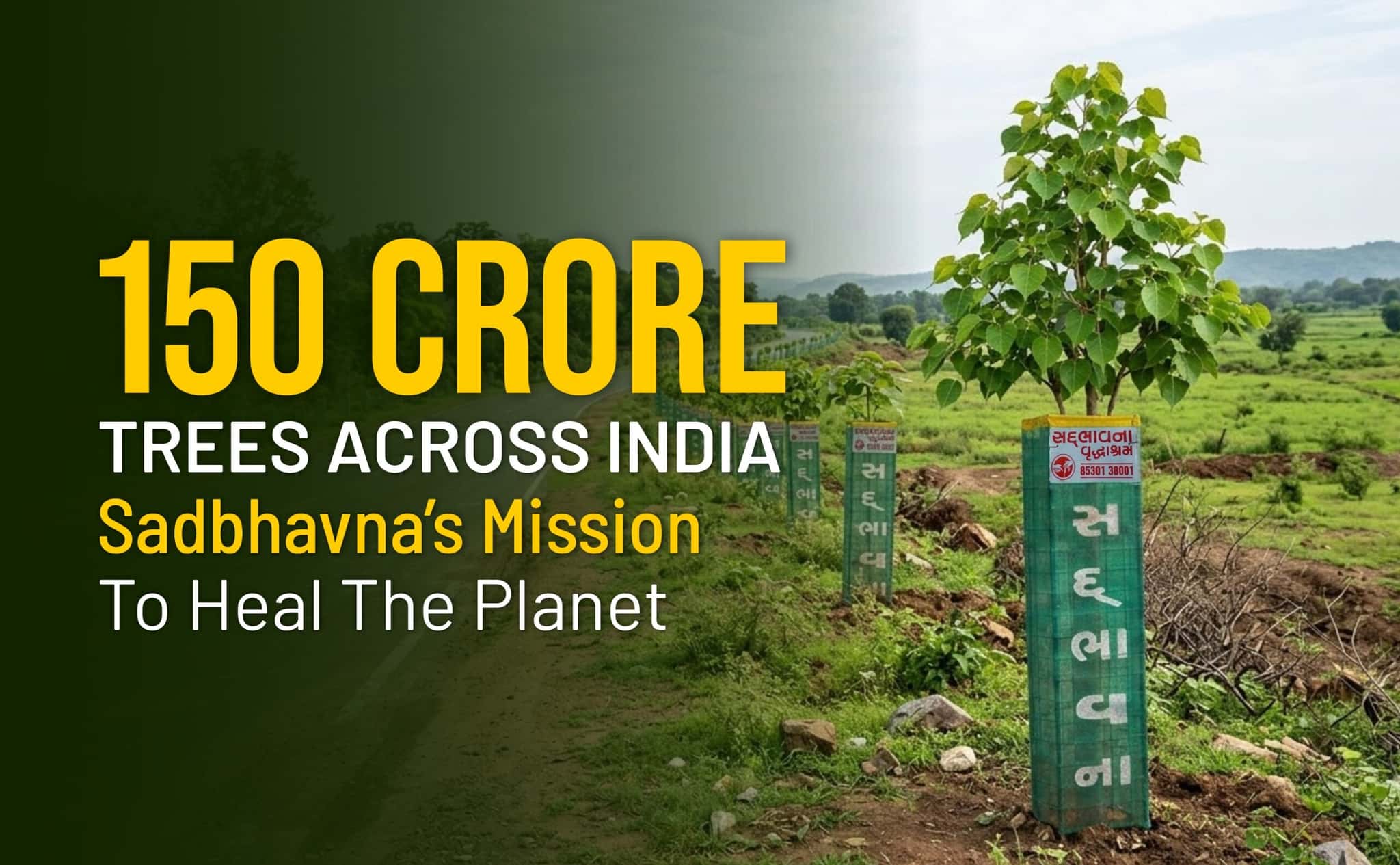
We often talk about saving the environment and planting trees is 1 meaningful place to begin with and Sadbhavna Vrudhashram has set itself a vision of 150 crore trees plantation across India. Yes, it is a huge number and a long term responsibility because the real work is not just putting a sapling into the soil, but it is helping that sapling survive, grow and become a part of the environment around it.
Can One Mission Make India Greener?
When we hear the word 150 crore, naturally we wonder how one organisation can even begin to work towards such a large number. The concern is not that one organisation can do everything alone; it is that a mission of this scale needs people, communities, local institutions and organisations to take part. It needs planning, suitable land, right tree species and care over time.
Sadbhavna’s tree plantation mission is built around this large vision. The aim is to contribute to greener India by taking plantation activities across different settings including villages, schools, roadsides and urban green spaces. The number may be large, but the work happens one location at a time; 1 village, 1 plantation site and one growing tree at a time.
It is what makes the mission worth understanding. It is not only about reaching the target, but it is about building a habit of caring for the environment.
India’s Need For 150 Crore Trees Plantation Drive & its Practical Approaches
We all know why trees are important. There are various advantages of tree plantation, but their major role is to absorb carbon dioxide, support biodiversity at large, provide shelter and dependence to species and location, contributing to the soil and water conservation.
These are some of the important advantages of tree plantation. But there is no single tree that is right for every place. Local climate, soil conditions, water availability and needs of the surrounding ecosystem all matter. India’s environmental challenges are different from one region to another and that is why its tree plantation in India needs to be planned locally rather than just treated the same at all places.
Trees such as Neem, Banyan and Amla are planted in many parts of India and can flourish with the right local ecosystem and planting site. Plantation methods matter too. For example, the Miyawaki method can be used in some projects to create dense plantations in small spaces. However, it is not a universal solution for each location. The method, spacing and species selection should suit the land and its purpose, only then would we get the advantage of tree plantation.
From More Than 1.2 Crore Trees to Vision of 150 Crore Trees Plantation
According to Sadbhavna’s Official tree plantation information, the organisation has planted more than 1.2 crore trees. This is a significant part of the journey, but is only a step towards 150 crores at Sadbhavana Tree Plantation mission.
A large 150 crore tree plantation mission needs a system behind it. There are a set of questions that would turn a promise into actual environmental work:
- Where will the saplings be planted?
- Which species are suitable?
- Who will water them?
- How will they be protected from animals, weather and accidental damage?
- Who will check on them after the initial plantation?
Planting Sapling is First Step
There are plantation drives where the people gather, plant saplings, take photographs and move on. The activity is well-intentioned, but what happens to the saplings a few weeks later? Some receive regular care; others dry out because there is no water protection or follow.
Sadbhavna’s tree plantation information describes support systems such as water tankers, tree guards, fencing and ongoing monitoring. Sadbhavna’s tree plantation mission looks beyond the number of trees planted on a particular day, but the survival and growth matters just equally.
How Communities Can Participates
A mission for tree plantation in India can’t depend only on plantation teams. A village for example can help care for the trees planted in common spaces and businesses can plan plantation projects as a part of their CSR.
Sadbhavna’s Green Village Initiative describes a model that aims to plant around 2000 trees in a village wherein involving community is a part of the process.
What Can You Do to Support 150 Crore Trees Plantation Drive?
There are small, practical ways to be involved in this mission:
- Explore Sadbhavna’s tree plantation donation options and understand how to contribute
- Care for trees near you by watering them, protecting them and reporting issue when needed
- Involved businesses in CSR work by supporting plantation project that includes clear plan for maintenance and monitoring
You can also learn more about the organisation and their wider work through Sadbhavna Vrudhashram website.
Just remember we can begin with one tree, 1 space and one responsibility to save trees and save Earth.
Frequently Asked Questions
1. What is Sadbhavna’s 150 crore trees plantation mission?
Sadbhavna’s long-term vision to plant 150 crore trees across India focuses on expanding green cover through plantation activities and encouraging care and community participation.
2. How many trees has Sadbhavna planted so far?
Sadbhavna’s official tree plantation page reports that more than 1.2 crore trees have been brought to life.
3. What are the main advantages of tree plantation?
Trees can provide shade, support biodiversity, help protect soil, absorb carbon dioxide as they grow and make local surroundings more comfortable.
4. How can I support tree plantation in India?
You can support a credible plantation initiative by donating, contributing towards tree planting and maintenance, and caring for trees in your neighbourhood.