

Sustainable Living Practices from Indian Villages
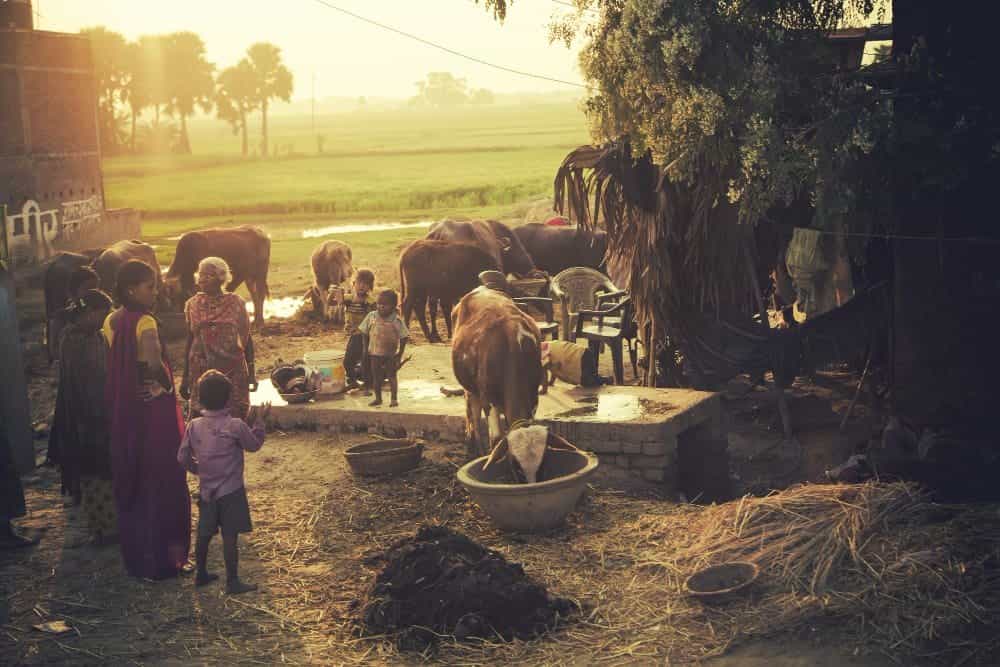
In a world racing toward modern comforts and overconsumption, there lies a quiet wisdom in the heart of Indian villages — sustainable living. For centuries, rural India has embraced a lifestyle that’s kind to the earth, mindful of resources, and deeply rooted in eco-friendly practices.
As climate change becomes a global concern and urban lifestyles take a toll on the environment, it’s time we turn back and learn from the sustainable traditions of Indian villages. These aren’t just age-old habits — they’re blueprints for a better future.
The first thing you’ll notice in most Indian villages is how nature and daily life go hand-in-hand. From using cow dung as fuel and fertilizer to building homes from mud, villagers have always followed a zero-waste lifestyle.
Take the example of Hivre Bazar in Maharashtra — once a drought-hit village, now a model of water conservation and sustainability. Under the leadership of Popatrao Pawar, the village implemented rainwater harvesting, watershed development, and tree plantation, transforming the entire ecosystem. Today, it not only supports agriculture but has also reversed migration from the village.
In urban homes, plastic packaging and excess consumption are the norm. But in many villages, reusing and repurposing is second nature.
Old sarees are stitched into quilts, tin cans become storage containers, and kitchen waste is composted or fed to animals. There’s no such thing as “waste” — everything has a second life.
In parts of Kerala, villagers follow biogas systems that convert kitchen waste and cow dung into cooking gas — reducing both household expenses and dependence on LPG. A clean, green, and circular solution.
While urban farms are just discovering the charm of organic produce, Indian farmers have done it for centuries. No chemical fertilizers. No synthetic pesticides. Just nature, patience, and knowledge passed down through generations.
In Sikkim, organic farming isn’t just a practice — it’s a way of life. The entire state was declared 100% organic in 2016, making it the first in the world. This not only preserved soil health but also opened doors to tourism and global recognition.
Farmers in Telangana’s Enabavi village have also shown how chemical-free farming leads to healthy food, better yields, and sustainable livelihoods.
Water is precious, and villagers know this better than anyone.
Traditional water management systems like stepwells in Gujarat, Johads in Rajasthan, and tank irrigation in Tamil Nadu are marvels of sustainable engineering. They recharge groundwater, store rainwater, and sustain entire communities during dry seasons.
In Alwar, Rajasthan, villagers revived over 10,000 Johads (small earthen dams) under the guidance of Rajendra Singh, also known as the “Waterman of India.” The result? Rivers that had dried up for decades started flowing again.
Sustainability isn’t just about what you consume — it’s also about how you live with others.
In Indian villages, community is central. Celebrations, farming, cooking — all are done together. Shared resources mean less consumption, fewer possessions, and a more connected way of life.
Villagers follow a minimalist lifestyle by default. One set of clothes for work, another for festivals. Homes are small but functional. Furniture is handmade. Energy is saved not because it’s expensive, but because it’s respected.
Forget cement and glass — rural homes are built from mud, bamboo, cow dung, and lime, which are biodegradable, breathable, and cost-effective. These homes stay cool in summer, warm in winter, and are built with materials sourced from the very land they stand on.
In Auroville (Tamil Nadu) and several tribal areas in Chhattisgarh and Jharkhand, traditional architecture techniques are being revived and even adapted into modern eco-homes.
Such structures not only reduce the carbon footprint but also blend seamlessly with the environment.
Before modern pharmacies, villagers turned to their backyards for medicine.
From neem leaves to turmeric, tulsi to ashwagandha, Indian villages have relied on Ayurveda and local herbs for generations. This not only promotes natural healing but reduces reliance on mass-produced drugs and their environmental impact.
In regions like Uttarakhand and Assam, tribal communities still preserve these ancient medicinal systems, offering valuable insights into sustainable healthcare.
From weaving and pottery to handicrafts and handlooms — many rural economies thrive on sustainable livelihoods. These crafts use natural materials, involve minimal machinery, and often have zero environmental waste.
Villages in Kutch, Gujarat, are known for their intricate bandhani and ajrakh prints, dyed with natural colors. Similarly, handwoven baskets from Odisha and North-East India are made entirely from bamboo — sturdy, reusable, and beautiful.
Supporting such crafts not only promotes sustainability but also empowers rural artisans.
Indian villages are not relics of the past — they are living models of sustainable living. As we face rising environmental challenges in cities, the answers often lie in the simple, rooted practices of our rural heartlands.
We don’t need to reinvent the wheel. We just need to look back, learn, and adapt — blending traditional wisdom with modern innovation.
Let’s reconnect with these practices, respect our roots, and build a future that’s not just advanced, but also sustainable — for us and generations to come.