

How NGOs Help Businesses Achieve Carbon Offset and Sustainability Goals
- 1 month Ago
- 6 Min Read
- 0 Comments
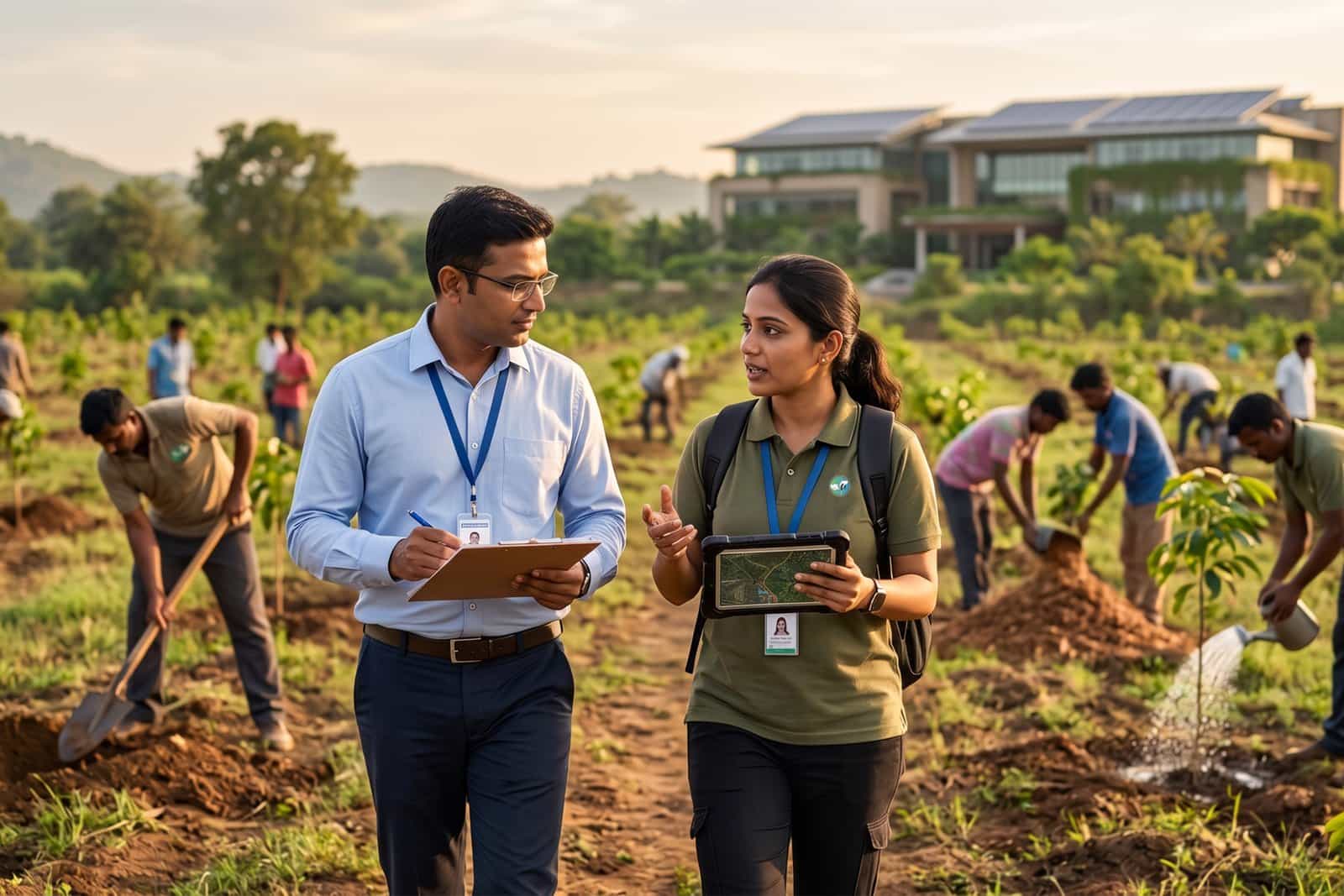
“Sustainability”, this word in itself has grown in various ways over the years. The word has moved from being a ‘nice-to-have’ to an important part of business strategies these days.
Firstly, let’s understand sustainability. It is an active act of mindfulness wherein natural resources are used optimally and hence their depletion issue is catered to effectively. Businesses are actively thinking about reducing their carbon footprints by meeting the sustainability requirements set by them. They are getting stronger in implementation of CSR initiatives by engaging employees in environmental activities and thus contributing to the local communities and society.
But having sustainability goals and implementing environmental actions that actually help the environment are actually two different things and this is where the role of NGO becomes important.
NGOs help businesses reach their sustainability goal by undertaking various activities such as CSR tree plantation drive, teaching and spreading awareness about different green skills, and helping businesses develop an eco-friendly approach in their work. This way as businesses explore approaches that help achieve carbon offset in India, partnership with experienced NGOs can turn out to be fruitful.
What Does Carbon Offset In India Mean For Businesses ?
Firstly, let’s understand how businesses generate emissions. Businesses generate carbon emissions through daily office use, transportation, manufacturing units, electricity consumption, supply chains, business traveling and various such events. And since all these activities take place everyday, carbon reduction should ideally come first as a part of corporate responsibility.
Carbon offset in India can be achieved by doing supporting activities that compensate or remove carbon emissions. Common activities to balance out emission produced include tree plantation through reforestation, protection of forests by stopping illegal deforestation, building clean energy sources, and by restoring coastal mangroves, seagrasses, and salt marshes.
Why are NGOs Important Partners in Corporate Responsibility?
Businesses may have employees funding sustainability targets and CSR budgets already set, but they do not have the local environmental expertise and community networks that are necessary for corporate tree plantation drive. They do not even have long-term monitoring systems, knowledge of suitable native species, and excess to appropriate plantation locations. NGOs can help to bridge that gap.
An NGO can help with CSR tree plantation by planning the steps implemented by the same, engaging the communities in your drive, and helping you maintain the same and even document it. This would create a sense of corporate responsibility rather than the CSR tree plantation drive being just a one day corporate activity.
How CSR Tree Plantation Can Support Sustainability Goals
Undertaking CSR Tree Plantation is a visible environmental action that employees can physically participate in. It also engages and involves community as the CSR Plantage tree plantation programmes may involve local communities, schools, volunteers, employees and environmental organisations to partake in the drive.
When collaborating for a CSR tree plantation drive with an NGO, the initiative doesn’t end when the sapling is planted into the ground.The NGOs take care about the maintenance right from watering and protecting it to monitoring its survival, maintaining it and doing periodic assessments of the tree plantation.
Corporate Tree Plantation – A Long-Term Programme
While many companies undertake CSR tree plantation drives, they just organise this drive for a one day event wherein photos are taken, saplings are planted and the activity ends.
But what about sustainability?
Sustainability requires continuity, which these one day events don’t cater to. The CSR tree plantation programme would have a pre-planning stage before plantation. They identify suitable land, understand the local ecology appropriately. They then select the tree plantation species and determine the water availability in that area. During the plantation, they need to prepare the site, involve the community and employees in and document that initiative. The job doesn’t end here post plantation. Watering the plants, monitoring of their survival and periodic maintenance play an equal important role as tree plantation. All of this will ensure that the corporate plantation drive is sustainable in nature.
Beyond Tree Plantation – NGOs Role
Beyond corporate tree plantation, NGOs can also spread waste management awareness, pitch in for water conservation and have biodiversity initiatives. They can even help spread environmental education, have community clean-up programmes, and focus on ecological restoration. Businesses should look at sustainability as a corporate responsibility that helps take some environmental action, indulge in community participation and create a long-term impact. NGOs can help companies identify initiatives that align with their CSR priorities, help to carbon offset in India, and fulfill community needs.
How Businesses Can Choose the Right NGO Partner
Businesses undertaking corporate responsibility should look for NGOs that have experience in conducting environmental programmes. They should seek to understand the transparency around where their money goes. Businesses should ask openly about the plantation cost, maintenance, community involvement and programme administration cost involved.
Not just that, as a part of the corporate responsibility, businesses should also ask about how the CSR activity is going to be monitored.
Who would maintain the trees?
How often would the survival be checked?
Is the documentation involved?
Can businesses receive impact updates?
When doing CSR tree plantation, businesses should look beyond numbers. Well, 10,000 trees planted surely sounds impressive, but the harder question to ask is how many survived? Sadbhavana Vruddhashram provides answers to all these questions asked by businesses looking for CSR tree plantation drive.
Measuring Impact of Corporate Responsibility Initiatives
For achieving carbon offset in India, businesses may focus on measurable indicators that can help them balance out the carbon emissions. They can check how many saplings have been planted, what is their survival rate, which areas have been restored with the green cover, which species are diversified due to it. Apart from these they can even measure how many employees participated in it, their maintenance period and the environmental awareness activities that the CSR programme had.
The carbon impact depends on various factors such as tree species planted, its growth rate, the location where it is planted, its survival rate and the methodology used to plant it. So businesses shouldn’t automatically convert every planted sapling into just a simple act of carbon offset in India. Every act of reforestation or aforestation can help to restore the green covers. Rebuilding the ecosystems such as mangroves, salt marshes and seagrass beds also help to offset the carbon emissions. Acts of avoidance such as deforestation can also help to carbon offset in India.
Building Greener Future
Businesses don’t have to achieve sustainability goals alone. NGOs can help with this by bringing in their local knowledge, implementation expertise, and community relationships; while businesses may bring their resources, employee participation and long-term commitment. Together they can create opportunities for carbon offset in India that go ahead with greater continuity. Sustainability becomes more meaningful when corporate resources can be experienced it for years to come.
Collaborating with NGOs such as Sadbhavana Vruddhashram, who are already undertaking tree plantation drives, can actually help businesses to fulfil their corporate responsibility. Businesses should first calculate their carbon impact by calculating their yearly carbon footprint. They should then either donate for or collaborate with a trusted local NGO that can help them to do CSR tree plantation.
Sustainability is a journey and offsetting your carbon through tree plantation is a simple and a beautiful way to give back to the planet that we call home. Every single sapling that is planted counts towards a sustainable Earth and each individual, whether a business or an NGO or employees and communities, have equal responsibility to undertake carbon offset in India.